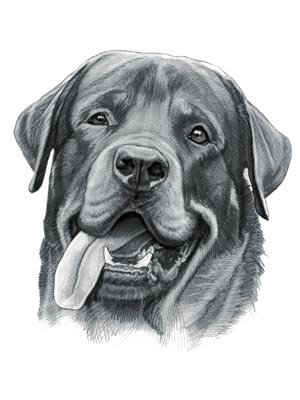
Working Dogs: The term Working Dogs is the classification used by kennel clubs and dog breeders to specify the group of dogs that were bred or trained to undertake different types of work to help people in many every day tasks. This is a highly diverse group and includes pastoral breeds that performed herding tasks to help shepherds, drovers and herders. Livestock guards, often alerted by the herders, protected flocks and herds from dangerous predators such as wolves. Guard dogs, such as the Mastiff breeds, were used to protect both property and people and are still used today in this function by the police and the military. Other Working dogs perform the jobs of helpers such as search and rescue and guide dogs. Other Working breeds also worked as haulers, pulling sledges or carts. Working dogs tend to be large, although there are a few smaller, robust exceptions to the rule. Working dogs are bred for endurance, stamina and strength, many capable of living outdoors, travelling across difficult terrain in all types of weather. For additional information refer to our article on Guard Dogs. Breeds of Working Dogs: The breeds that have been designated as Working Dogs by the American Kennel Club (AKC) include the Akita, Alaskan Malamute, Anatolian Shepherd Dog, Bernese Mountain Dog, Black Russian Terrier, Boerboel, Boxer, Bullmastiff, Cane Corso, Chinook, Doberman Pinscher, Dogue de Bordeaux, German Pinscher, Giant Schnauzer, Great Dane, Great Pyrenees, Greater Swiss Mountain Dog, Komondor, Kuvasz, Leonberger, Mastiff, Neapolitan Mastiff, Newfoundland, Portuguese Water Dog, Rottweiler, Samoyed, Siberian Husky, St Bernard, Standard Schnauzer and the Tibetan Mastiff. Working Dogs - Akita: The big, responsive, brave Akita is used as a hard working hunting and guard dog Working Dogs - Alaskan Malamute: The big, playful, devoted Alaskan Malamute (AKC:1935) is used as a Watchdog and Hunter. Working Dogs - Anatolian Shepherd Dog: The big, independent, bold Anatolian Shepherd (AKC:1996) is used as a Watchdog, hunter and Farm Dog. Working Dogs - Bernese Mountain Dog: The big, intelligent Bernese Mountain Dog (AKC:1937) is used as a Watchdog, Herding and droving dog. Working Dogs - Black Russian Terrier: The eager, self-assured Black Russian Terrier (AKC:2004) is used as a Watchdog, Fighter and Military Dog. Working Dogs - Boerboel: The big, dominant, self-assured Boerboel is used as a Watchdog and Herder. Boxer Dog: The medium size, eager, fearless Boxer Dog (AKC:1904) is used as a Watchdog, Fighter and Hunter. Working Dogs - Bullmastiff: The big, protective, brave, hard working Bullmastiff (AKC:1934) is used as a Watchdog and Hunter. Working Dogs - Cane Corso: The big Cane Corso belongs to the Sporting Group is used as a Watchdog, Hunter and Retriever. Working Dogs - Doberman Pinscher: The medium size, eager, responsive Doberman Pinscher (AKC:1908) is used as a Working and Watchdog. Working Dogs - Dogue De Bordeaux: The big, vigilant, brave Dogue De Bordeaux (AKC:2008) is used as a Watchdog, Fighter and Hunter. Working Dogs - German Pinscher: The medium size, spirited, brave German Pinscher (AKC:2003) is used as a Watchdog and Ratter. Working Dogs - Giant Schnauzer: The big, dominant, intelligent, faithful Giant Schnauzer (AKC:1930) is used as a Watchdog and Herder. Working Dogs - Great Dane: The giant size, self-assured, devoted Great Dane (AKC:1887) is used as a Watchdog and Hunter. Working Dogs - Great Pyrenees: The giant size, fearless, patient Great Pyrenees (AKC:1933) is used as a Watchdog and Herder. Greater Swiss Mountain Dog: The big, good-natured, protective, fearless Greater Swiss Mountain Dog (AKC:1995) is used as a Watchdog and Herder. Working Dogs - Komondor: The big, calm, fearless, hard working Komondor (AKC:1937) is used as a Herding and Watchdog. Working Dogs - Kuvasz: The giant size, protective, independent Kuvasz (AKC:1931) is used as a Watchdog, Hunter. Working Dogs - Leonberger: The giant size, adaptable, fearless, hard working Leonberger (AKC:2010) is used as a Watchdog and Herder. Working Dogs - Neapolitan Mastiff: The big, fearless, dominant, protective Neapolitan Mastiff (AKC:2004) is used as a Watchdog, Fighter and Hunter. Newfoundland Dog: The big, brave, loyal, sociable, hard working Newfoundland Dog (AKC:1886) is used as a Watchdog, Hunting & Herder. Working Dogs - Portuguese Water Dog: The medium size, impetuous, brave Portuguese Water Dog (AKC:1983) is used as a Watchdog and Gundog. Rottweiler: The medium to big sized, fearless, protective, Rottweiler (AKC:1931) is used as a Watchdog, Herder and Military Dog. Working Dogs - Samoyed: The medium size, lively, hard working Samoyed (AKC:1906) is used as for Herding and guarding Working Dog - Siberian Husky: The medium size, outgoing, observant Siberian Husky (AKC:1930) is used as a Watchdog and for sled pulling. Working Dog - St Bernard: The giant size, independent, out-going St Bernard (AKC:1885) is used as a Working Group (AKC:1885). Working Dog - Standard Schnauzer: The medium size, good-natured, devoted, hard working Standard Schnauzer (AKC:1904) is used as a Watchdog, Ratter and Guard Dog. Working Dogs - Tibetan Mastiff: The big, strong willed, protective Tibetan Mastiff (AKC:2007) and was used as a Watchdog, Fighter and Hunter. |