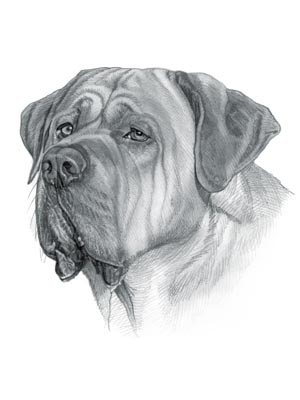
| Tosa Inu (Japanese Mastiff) |
Tosa Inu Characteristics (Japanese Mastiff): The courageous and cautious Tosa Inu, aka the Tosa Ken is a breed of large dog classified as a member of the Working Dog Group (Rare breed). The Tosa Inu, is characterized by its stately appearance with a small head and muscular neck with a fold of loose skin hanging from the neck (called a dewlap) and majestic expression. Other characteristics include dark, small, dark brown eyes; small, high set ears that hang close to the cheeks; a thick, tapering tail and a powerful, robust gait. The temperament of the Tosa Inu can be described as Suspicious, Brave, Sensitive. The coat type of the Tosa Inu is described as short, smooth coat in brindle, fawn, black, red colors. Due to its characteristics and qualities, the Tosa Inu demonstrated the desired traits of a Watch dog and Fighting dog and is known by its alternative names the "Japanese Mastiff" or the "Tosa Ken". The origin of the Tosa Inu dog breed was in Japan where it was developed in the 1400's. Fast Facts about the Tosa Inu: The following facts provide fast information about the Tosa Inu breed. Size: Large *** Breed Group: Working Dog Group (Rare breed) *** Alternative name: "Japanese Mastiff" *** Origin: Japan *** Male Height: 24.5 to 32 inches (62 to 82 cm) *** Female Height: Slightly Less *** Male Weight: 80 and 135 pounds (36 and 61 kg) *** Female Weight: Slightly Less *** Coat Type: short, smooth coat *** Coat Colors: brindle, fawn, black, red colors *** Litter Size: 6 to 8 puppies *** Health Problems: Bloat *** Lifespan: 10-12 years *** Hypoallergenic: No Tosa Inu Breed Group and Dog Type - Working Dog Group (Rare breed): The Tosa Inu is one of the many breeds of dogs that belong to the Working Dog Group (Rare breed). Other names for the Tosa Inu: The Tosa Inu is known by the alternative name of the "Japanese Mastiff". Other names for this breed of dog include the Japanese Mastiff, Tosa Token, Japanese Fighting Dog, Tosa Ken, Japanese Tosa and Tosa Fighting Dog. Tosa Inu History and Origin: The country of origin of the Tosa Inu breed was in Japan during the 1400's. One of the ancestors of the Tosa Inu was the ancient Shikoku dog, an athletic Spitz-type hunting dog. Another ancestor of the Tosa Inu was the Tibetan Mastiff, a ferocious Asian war dog that was taken to Japan during the failed Mongol invasions of Japan (1274 and 1281) led by Kublai Khan. The ferocious and fearless Tosa Inu, aka the Tosa Ken or the Japanese Mastiff, was developed in the Japanese province of Tosa (now the Kochi prefecture). The words 'Inu" and Ken" both mean 'dog' in Japanese. The Tosa Inu breed was carefully developed as fighting dogs and the dog fighting contests were conducted under strict rules and accompanied by sacred rituals. Dog fighting contests were extremely popular during this period and the Tosa Inu together with the stronger Akita Inu were the most prized of all the Japanese fighting dogs. As time passed selective breeding resulted in a reversal of the attributes of the two dogs and the Tosa Inu became the strongest and more ferocious of the two Japanese breeds. The demise of the Edo period in Japan in 1868 heralded the end of the isolationist policies of Japan and an influx of traders from the west. Many of the western foreigners in Japan were accompanied by their dogs. Japanese dog breeders were impressed by the strength and endurance of the western dogs and initiated a breeding program in which they experimented with crossing their Tosa Inu with the Bulldog, the Great Dane, Saint Bernard and other European mastiff type dogs. (Refer to History of all the Mastiff breeds). The hybrid Tosa Inu is a result of the specialized breeding program which peaked in the 1930's. However, in the 1940's the Tosa Inu, the Japanese Mastiff, was at the point of extinction. This was due to the effects of WW2 when the dogs fell into a terrible decline due to severe food shortages in Japan and a deadly epidemic of distemper. The Tosa Inu breed was saved official Tosa Inu organization responsible for the preservation and expansion of the breed who used just 12 dogs as true examples of the breed. Tosa Inu Modern History: The modern history of the Tosa Inu moved on and the breed is still used as a Japanese fighting dog and a Watchdog, Guard Dog, Hunter and as a military and police dog. The Tosa Inu is a dangerous dog: The fierce Tosa Inu is banned from the UK and there are Limitations of ownership in some USA States. Tosa Inu Height: The Tosa Inu breed is classified as a large sized dog. The height to the shoulder of a male dog is 24.5 to 32 inches (62 to 82 cm). The height to the shoulder of a female dog is slightly less. Tosa Inu Weight: Not surprisingly for a large sized dog, the weight of a male dog is 80 and 135 pounds (36 and 61 kg). The weight of the smaller female dog is slightly less than the male. Tosa Inu Coat Type: The coat type is described as a short, smooth coat. Tosa Inu Coat Colors: The colors of this dog breed include brindle, fawn, black, red colors. N.B. The term "Red" refers to reddish shades of orange, brown, and tan colors. Brindle is a brownish or tawny color. Tosa Inu Grooming - LOW Grooming Needs: The grooming needs of the Tosa Inu is categorized as Low in order to maintain a healthy, tangle-free coat and reduce the risk of skin infections. The limited grooming needs of the Tosa Inu are considered to be low maintenance, requiring limited attention to grooming where brushing and combing, is concerned. Grooming Requirements should include bathing the dog on a monthly basis and making regular inspections of the nails, teeth, eyes and ears. Tosa Inu Litter Size: The litter size of this dog breed ranges from 6 to 8 puppies. Tosa Inu puppies for sale can be obtained reputable breeders and from rescue centers. The cost of Tosa Inu puppies varies depending on location, pedigree history and the dog breeder. Tosa Inu Temperament and personality: The temperament and personality of this popular dog breed is described as Courageous, Suspicious, Brave, Sensitive and Cautious. Tosa Inu Exercise Requirements - HIGH Exercise Requirements: The exercise requirements of this breed of dog is high. The Tosa Inu requires regular daily exercise consisting of approximately one to two hours each day. This large, powerful dog has a smooth, strong, strident, robust gait with strides of a moderate length and requires a brisk walking speed or jogging by the owner to meet the dogs exercise requirements. Tosa Inu Diet: A fully grown Tosa Inu should be fed twice a day. A diet consisting of a premium dog food can be balanced with fresh food eaten by the family. The question is What Can Dogs Eat?. Check out our comprehensive list of what dogs can and what dogs cannot eat. Tosa Inu Health Problems: Potential health problems of the Tosa Inu breed include Bloat . Resolving health problems can prove to be expensive and it is always wise to obtain pet insurance or dog health insurance when buying a dog. Is the Tosa Inu dog breed said to be Hypoallergenic? Answer: No. Tosa Inu Lifespan: The life expectancy of dogs vary according to the size, breed of dog and any serious health problems. The typical lifespan of the Tosa Inu breed is 10-12 years. Tosa Inu Male Dog Names: Male Dog names are most often chosen to reflect favorite names of the owner or the strength, size, coloring and country of origin of the Tosa Inu breed. To give you some inspiration regarding good male Tosa Inu names our small selection might be of help with naming boy dogs. Our top male dog names are: Kotaro *** Reggie *** Haruki *** Storm *** Kei *** Daichi *** Riot *** Shota *** Kotaro *** Areshi. Tosa Inu Female Dog Names: Female Dog names tend to be softer, prettier and reflect the temperament of the girl dog. Our top choice of good female Tosa Inu names are Tessa *** Risa *** Sakura *** Miki *** Tally *** Saya *** Hana *** Pepper *** Mika *** Akari. Fast Facts about the Tosa Inu: The following facts provide fast information about the Tosa Inu breed. Scientific name: Canis lupus familiaris *** Dog Breed Group: Working Dog Group (Rare breed) *** Size: Large *** Country of Origin: Japan *** History / Date: 1400's *** Male Tosa Inu Height: 24.5 to 32 inches (62 to 82 cm) *** Male Tosa Inu Weight: 80 and 135 pounds (36 and 61 kg) *** Coat Type: short, smooth coat *** Litter Size: 6 to 8 puppies *** Tosa Inu Health Problems: Hip dysplasia, thyroid, and joint problems *** Tosa Inu Lifespan: 10-12 years *** |