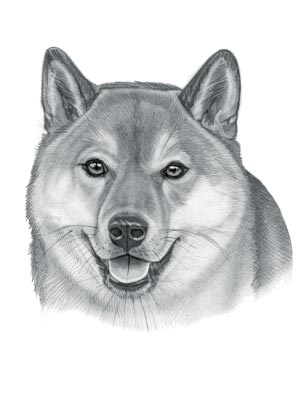
Shikoku Characteristics: The energetic and watchful Shikoku is a breed of Medium to Large dog classified as a member of the Working Dog Group (Rare breed). The Shikoku, is characterized by its impressive, powerful appearance with a muscular and alert expression. Other characteristics include dark brown, smallish, triangular shaped eyes; small, strongly pricked, triangular shaped ears; a sickle shaped or curved tail that sits up and over its back and a light, agile gait. The temperament of the Shikoku can be described as Agile, Cautious, Loyal. The coat type of the Shikoku is described as thick double coat in assorted colors. Due to its characteristics and qualities, the Shikoku demonstrated the desired traits of a Hunting Dog and is known by its nick name the "Most Venerated". The origin of the Shikoku dog breed was in Japan where it was developed in the Ancient Times. Fast Facts about the Shikoku: The following facts provide fast information about the Shikoku breed. Size: Medium to Large *** Breed Group: Working Dog Group (Rare breed) *** Nick name: "Most Venerated" *** Origin: Japan *** Male Height: 19-22 inches (49-55 cm) *** Female Height: 17-19 inches (43-49 cm) *** Male Weight: 35-55 lbs (16-25 kg) *** Female Weight: 35-55 lbs (16-25 kg) *** Coat Type: thick double coat *** Coat Colors: assorted colors *** Litter Size: 3-5 puppies *** Health Problems: None *** Lifespan: 10 - 12 years *** Hypoallergenic: No Shikoku Breed Group and Dog Type - Working Dog Group (Rare breed): The Shikoku is one of the many breeds of dogs that belong to the Working Dog Group (Rare breed). Other names for the Shikoku: The Shikoku is known by the nickname of the "Most Venerated". Other names for this breed of dog include the Japanese Wolfdog, Shikoku-inu, Kochi-ken and Mikawa Inu. Origin of the name: The origin of the name "Shikoku" derives from its place of origin on the island of Shikoku, the smallest of the four main islands of Japan. Shikoku History and Origin: The country of origin of the Shikoku breed was in Japan during ancient times where it was used as an agile and resilient Hunting Dog that was used to help humans to hunt wild boar and deer. The Shikoku was descended from Spitz-type dogs that existed thousands of years ago in the colder northern parts Asia. The Shikoku lived in remote mountain regions and retained many of the physical attributes and characteristics of the original ancient spitz-type dogs including a pointed muzzle, pointed ears, a thick, dense coat and a high carried tail that curled up and over the back of the dog. The demise of the Edo period in Japan in 1868 heralded the end of Japan's isolationist foreign policies and the Shiba Inu was imported to Europe and the United States of America. Shikoku Modern History: The modern history of the Shikoku moved on and the breed is now valued as a protective family pet and affectionate companion. Shikoku Height: The Shikoku breed is classified as a Medium to Large sized dog. The height to the shoulder of a male dog is 19-22 inches (49-55 cm). The height to the shoulder of a female dog is 17-19 inches (43-49 cm). Shikoku Weight: In this medium to large sized dog, the weight of a male dog is 35-55 lbs (16-25 kg). The weight of the smaller female dog is 35-55 lbs (16-25 kg). Shikoku Coat Type: The coat type is described as thick double coat. Shikoku Coat Colors: The colors of this dog breed consist of assorted colors consisting of Red Sesame, Black Sesame and Sesame. N.B. The term 'Sesame' refers to a red base coat with black overlay. Shikoku Grooming - HIGH Grooming Needs: The grooming needs of the Shikoku is categorized as high in order to maintain a healthy coat and reduce the risk of skin infections. The high grooming needs of the Shikoku is considered to be high-maintenance and requires daily brushing and combing. Grooming Requirements should include bathing the dog on a monthly basis and making regular inspections of the nails, teeth, eyes and ears. Shikoku Litter Size: The litter size of this dog breed ranges from 3-5 puppies. Shikoku puppies for sale can be obtained reputable breeders and from rescue centers. The cost of Shikoku puppies varies depending on location, pedigree history and the dog breeder. Shikoku Temperament and personality: The temperament and personality of this popular dog breed is described as Energetic, Agile, Cautious, Loyal and Watchful. Shikoku Exercise Requirements: The exercise requirements of this breed of dog are moderate. The Shikoku requires regular daily exercise consisting of about one hour every day. This medium to large sized dog has a light, agile, quick gait with strides of a moderate length requiring a steady walking or jogging speed by the owner to meet the dogs exercise requirements. If the dog has more energy than you do, then teach your dog to play ball in a chase and catch game. Shikoku Diet: A fully grown Shikoku should be fed twice a day. A diet consisting of a premium dog food can be balanced with fresh food eaten by the family. The question is What Can Dogs Eat?. Check out our comprehensive list of what dogs can and what dogs cannot eat. Shikoku Health Problems: Potential health problems of the Shikoku breed have shown no recurring problems. Resolving health problems can prove to be expensive and it is always wise to obtain pet insurance or dog health insurance when buying a dog. Is the Shikoku dog breed said to be Hypoallergenic? Answer: No. Shikoku Lifespan: The life expectancy of dogs vary according to the size, breed of dog and any serious health problems. The typical lifespan of the Shikoku breed is 10 - 12 years. Shikoku Male Dog Names: Male Dog names are most often chosen to reflect favorite names of the owner or the strength, size, coloring and country of origin of the Shikoku breed. To give you some inspiration regarding good male Shikoku names our small selection might be of help with naming boy dogs. Our top male dog names are: Taichi *** Kazu *** Hayato *** Kotaro *** Haruki *** Kei *** Daichi *** Shota *** Kotaro *** Areshi. Shikoku Female Dog Names: Female Dog names tend to be softer, prettier and reflect the temperament of the girl dog. Our top choice of good female Shikoku names are Rina *** Saki *** Risa *** Sakura *** Miki *** Saya *** Hana *** Mika *** Akari *** Mai. Fast Facts about the Shikoku: The following facts provide fast information about the Shikoku breed. Scientific name: Canis lupus familiaris *** Dog Breed Group: Working Dog Group (Rare breed) *** Size: Medium to Large *** Country of Origin: Japan *** History / Date: Ancient Times *** Male Shikoku Height: 19-22 inches (49-55 cm) *** Male Shikoku Weight: 35-55 lbs (16-25 kg) *** Coat Type: thick double coat *** Litter Size: 3-5 puppies *** Shikoku Health Problems: Hip dysplasia, thyroid, and joint problems *** Shikoku Lifespan: 10 - 12 years *** |