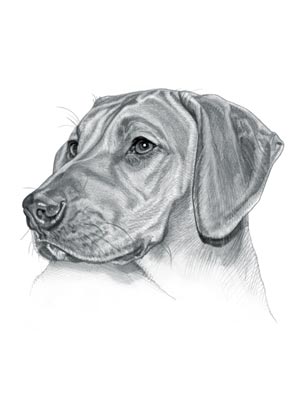
Rhodesian Ridgeback Characteristics: The noble and faithful Rhodesian Ridgeback is a breed of large dog classified as a member of the Hound Dog Group (AKC:1955), a Sighthound. The Rhodesian Ridgeback, is characterized by its impressive, dignified, strong appearance with a distinctive ridge along the back (formed by hair growing in an opposite direction to the rest of the coat). Other characteristics include sparkling, medium sized, round eyes; medium, high set, drop ears; a long, tapering tail and an agile, lively gait. The temperament of the Rhodesian Ridgeback can be described as Loyal, Dignified, Sensitive. The coat type of the Rhodesian Ridgeback is described as sleek, glossy, short coat in assorted colors. Due to its characteristics and qualities, the Rhodesian Ridgeback demonstrated the desired traits of a Hunting Dog and is known by its nick name the "Lion Dog". The origin of the Rhodesian Ridgeback dog breed was in Zimbabwe (Rhodesia) where it was developed in the 1600's. Fast Facts about the Rhodesian Ridgeback: The following facts provide fast information about the Rhodesian Ridgeback breed. Size: Large *** Breed Group: Hound Dog Group (AKC:1955), a Sighthound *** Nick name: "Lion Dog" *** Origin: Zimbabwe (Rhodesia) *** Male Height: 25-27 inches (63-69 cm) *** Female Height: 24-26 inches (61-66 cm) *** Male Weight: 80-90 pounds (36-41 kg) *** Female Weight: 65-75 pounds (29-34 kg) *** Coat Type: sleek, glossy, short coat *** Coat Colors: assorted colors *** Litter Size: 6-8 puppies *** Health Problems: Dermoid sinus, Hip and Elbow Dysplasia *** Lifespan: 10-12 years *** Hypoallergenic: No Rhodesian Ridgeback Breed Group and Dog Type - Hound Dog Group (AKC:1955), a Sighthound: The Rhodesian Ridgeback is one of the many breeds of dogs that belong to the Hound Dog Group (AKC:1955), a Sighthound. Other names for the Rhodesian Ridgeback: The Rhodesian Ridgeback is known by the nickname of the "Lion Dog". Other names for this breed of dog include the Ridgeback, Lion Dog and African Lion Hound. Origin of the name: The origin of the name "Rhodesian Ridgeback" derives from its country of origin in Rhodesia, now Zimbabwe, in South Africa. The word "Ridgeback" describes the distinctive ridge of hair along the dog's spine that grows in the opposite direction to the rest of the coat. Rhodesian Ridgeback - Sighthound: The Rhodesian Ridgeback is a Sighthound, one of the hunting dog breeds, built for speed and agility with excellent eyesight to track small and large game, especially lions. Rhodesian Ridgeback History and Origin: The country of origin of the Rhodesian Ridgeback breed was in Zimbabwe (Rhodesia) during the 1600's. The ancestors of the breed can be traced to the Cape Colony of Southern Africa when the Dutch East India Company established a permanent settlement in 1652. The Dutch settlers developed the Rhodesian Ridgeback from the European mastiff-type dogs and the indigenous Africanis dog. The name 'Africanis' is an umbrella name for all South African dogs of ancient origin that were believed to have directly descended from the gazehounds of the ancient Egyptians. The semi-domesticated, ridge-backed Hottentot hunting dog was one of the Africanis dogs, that was used by the indigenous Bantu and Khoikhoito people, was another ancestor of the Rhodesian Ridgeback. The instantly recognizable Rhodesian Ridgeback hunting dog had the stamina to work during the heat of the day but was also able to endure the cold nights in the African bush. Small packs of 2 or 3 Rhodesian Ridgeback dogs were originally used by hunters on horseback to track large game, especially the lion - hence its nickname the "Lion Dog". The Rhodesian Ridgeback would race ahead of the horse riders and keep the lion at bay until the hunter arrived and shot it. The courageous, super agile Rhodesian Ridgeback was also used on other hunting expeditions for the leopard, elephant, lion, rhino, buffalo, wildebeest and the baboon. The South African also used the fiercely loyal Rhodesian Ridgeback to protect their families, property and homesteads. The original standard for the Rhodesian Ridgeback was drafted in 1922 by Francis Richard Barnes in Bulawayo, Rhodesia, and was approved by the South African Kennel Union in 1926. From 1930 to 1949 the Rhodesian Ridgebacks spread across Africa and was exported to Europe, South America and the United States. The Rhodesian Ridgeback was used in the to US to hunt lynx, bear and the mountain lion. The Rhodesian Ridgeback was officially recognized by the American Kennel Club (AKC) in 1955. Rhodesian Ridgeback Modern History: The modern history of the Rhodesian Ridgeback moved on and the breed is now used as a Watchdog, Guard Dog and as a boisterous companion. Rhodesian Ridgeback Height: The Rhodesian Ridgeback breed is classified as a large sized dog. The height to the shoulder of a male dog is 25-27 inches (63-69 cm). The height to the shoulder of a female dog is 24-26 inches (61-66 cm). Rhodesian Ridgeback Weight: Not surprisingly for a large sized dog, the weight of a Rhodesian Ridgeback male dog is 80-90 pounds (36-41 kg). The weight of the smaller female dog is 65-75 pounds (29-34 kg). Rhodesian Ridgeback Coat Type: The coat type is described as sleek, glossy, short coat. Many Rhodesian Ridgebacks have a Melanistic Mask (a dark coloration of the skin or hair typically on the muzzle and face of the dog) because of a high concentration of melanin. Rhodesian Ridgeback Coat Colors: The colors of this dog breed consist of assorted colors consisting of Wheaten, Light Wheaten and Red Wheaten. N.B. The term "Red" refers to reddish shades of orange, brown, and tan colors. Rhodesian Ridgeback Grooming - MODERATE Grooming Needs: The dog grooming needs of the Rhodesian Ridgeback is not extensive and therefore categorized as Moderate in order to maintain a healthy coat, reducing the risk of skin infections. The modest grooming needs of the Rhodesian Ridgeback is considered to be mid-maintenance requiring weekly brushing and combing. Dog Grooming Requirements should include bathing the Rhodesian Ridgeback on a monthly basis and making regular inspections of the teeth, eyes, nails and ears. Rhodesian Ridgeback Litter Size: The litter size of this dog breed ranges from 6-8 puppies. Rhodesian Ridgeback puppies for sale can be obtained reputable breeders and from rescue centers. The cost of Rhodesian Ridgeback puppies varies depending on location, pedigree history and the dog breeder. Rhodesian Ridgeback Temperament and personality: The temperament and personality of this popular dog breed is described as Noble, Loyal, Dignified, Sensitive and Faithful. Rhodesian Ridgeback Exercise Requirements - HIGH Exercise Requirements: The exercise requirements of this breed of dog is high. The Rhodesian Ridgeback requires regular daily exercise consisting of approximately one to two hours each day. This large, powerful dog has a firm, agile, lively gait with strides of a moderate length and requires a brisk walking speed or jogging by the owner to meet the dogs exercise requirements. Rhodesian Ridgeback Diet: A fully grown Rhodesian Ridgeback should be fed twice a day. A diet consisting of a premium dog food can be balanced with fresh food eaten by the family. The question is What Can Dogs Eat?. Check out our comprehensive list of what dogs can and what dogs cannot eat. Rhodesian Ridgeback Health Problems: Potential health problems of the Rhodesian Ridgeback breed include Dermoid sinus, Hip and Elbow Dysplasia. Resolving health problems can prove to be expensive and it is always wise to obtain pet insurance or dog health insurance when buying a dog. Is the Rhodesian Ridgeback dog breed said to be Hypoallergenic? Answer: No. Rhodesian Ridgeback Lifespan: The life expectancy of dogs vary according to the size, breed of dog and any serious health problems. The typical lifespan of the Rhodesian Ridgeback breed is 10-12 years. Rhodesian Ridgeback Male Dog Names: Male Dog names are most often chosen to reflect favorite names of the owner or the strength, size, coloring and country of origin of the Rhodesian Ridgeback breed. To give you some inspiration regarding good male Rhodesian Ridgeback names our small selection might be of help with naming boy dogs. Our top male dog names for a Rhodesian Ridgeback are: Leon *** Mao *** Zubair *** Vinesh *** Kopano *** Ali *** Enock *** River *** Spirit *** Tango. Rhodesian Ridgeback Female Dog Names: Female Dog names tend to be softer, prettier and reflect the temperament of the Rhodesian Ridgeback girl dog. Our top choice of good female Rhodesian Ridgeback names are Anneke *** Sameera *** Jada *** Kishi *** Lesego *** Priyanka *** Ishani *** Kendal *** Saskia *** Kyla. Fast Facts about the Rhodesian Ridgeback: The following facts provide fast information about the Rhodesian Ridgeback breed. Scientific name: Canis lupus familiaris *** Dog Breed Group: Hound Dog Group (AKC:1955), a Sighthound *** Size: Large *** Country of Origin: Zimbabwe (Rhodesia) *** Rhodesian Ridgeback History / Date: 1600's *** Male Rhodesian Ridgeback Height: 25-27 inches (63-69 cm) *** Male Rhodesian Ridgeback Weight: 80-90 pounds (36-41 kg) *** Coat Type: sleek, glossy, short coat *** Litter Size: 6-8 puppies *** Rhodesian Ridgeback Health Problems: Hip dysplasia, thyroid, and joint problems *** Rhodesian Ridgeback Lifespan: 10-12 years *** |