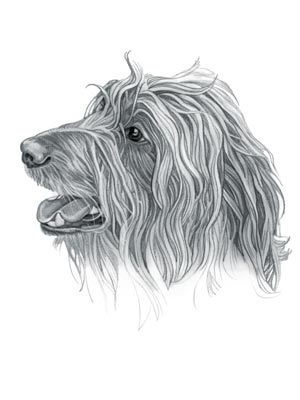
Otterhound Characteristics: The happy-go-lucky and bouncy Otterhound is a breed of large dog classified as a member of the Hound Dog Group (AKC:1909), a Scenthound. The Otterhound, is characterized by its strong, imposing appearance with a dignified but amiable expression. Other characteristics include dark, medium sized, deep set eyes; long, pendulous, folded ears; a thick, long tail and an effortless, smooth gait. The temperament of the Otterhound can be described as Even Tempered, Boisterous, Amiable. The coat type of the Otterhound is described as long, dense, coarse coat in assorted colors. Due to its characteristics and qualities, the Otterhound demonstrated the desired traits of a Hunting Dog and is known by its nick name the "Otter's Foe". The origin of the Otterhound dog breed was in Great Britain where it was developed in the ancient times. Fast Facts about the Otterhound: The following facts provide fast information about the Otterhound breed. Size: Large *** Breed Group: Hound Dog Group (AKC:1909) a Scenthound *** Nick name: "Otter's Foe" *** Origin: United Kingdom *** Male Height: 24 - 26 inches (60 - 65 cm) *** Female Height: Slightly Less *** Male Weight: 66 - 115 pounds (30 - 52 kg) *** Female Weight: Slightly Less *** Coat Type: long, dense, coarse coat *** Coat Colors: assorted colors *** Litter Size: 4-7 puppies *** Health Problems: Hip and Elbow Dysplasia, Gastric Torsion *** Lifespan: 10-12 years *** Hypoallergenic: No Otterhound Breed Group and Dog Type - Hound Dog Group (AKC:1909) a Scenthound: The Otterhound is one of the many breeds of dogs that belong to the Hound Dog Group (AKC:1909), a Scenthound. Other names for the Otterhound: The Otterhound is known by the nickname of the "Otter's Foe". Other names for this breed of dog include simply the Otter Hunter. Origin of the name: The origin of the name "Otterhound" simply derives from its ability to hunt otters, aquatic, weasel-like animals. Otterhound - Scent hound: The Otterhound is a Scent hound, one of the hunting dog breeds, built for endurance, with deep, open nostrils that enable the canine to pick up scent particles and track small game, especially the otter. Otterhound History and Origin: The country of origin of the Otterhound breed was in Great Britain during ancient times. The ancestor of the Otterhound is believed to be the, now extinct, 'Southern Hound', a slow, deliberate, unswerving scenthound that was probably cross bred with a terrier breed to produce the Otterhound. The Otterhound was developed when fishermen realized that otter were preying on the fish supply. There are records of otter-hunting as far back as the 1100'S. The strong, energetic Otterhounds hunted the otter in packs using their acute sensing ability to track the animal that might even have passed through the water the night before. The Otterhound was exported to the United States and was successfully used to hunt mink, raccoons and even bears. The Otterhound was officially recognized by the American Kennel Club (AKC) in 1909. The number of Otterhounds have substantially declined in the 1900's. The decline began in 1927 with the publication of 'Tarka the Otter', a novel by Henry Williamson, which recounted the story of a hunting Otterhound named Deadlock as the enemy of the hero of the book, Tarka the Otter. Then, in 1978, otters became a protected species in the UK and otter hunting was banned. The movie 'Tarka the Otter' was released in 1979 and the numbers of the Otterhound dropped dangerously low in the UK. The Otterhound breed was saved by a small group of dedicated breeders but in the UK the Otterhound is still rare, although it is no longer endangered. This is not the case in the United States where the River Otter is plentiful and not threatened. Otterhound Height: The Otterhound breed is classified as a large sized dog. The height to the shoulder of a male dog is 24 - 26 inches (60 - 65 cm). The height to the shoulder of a female dog is slightly less. Otterhound Weight: Not surprisingly for a large sized dog, the weight of a male Otterhound is 66 - 115 pounds (30 - 52 kg). The weight of the smaller female dog is slightly less than the male. Otterhound Coat Type: The coat type is described as a long, dense, coarse coat. Otterhound Coat Colors: The colors of this dog breed consist of assorted colors consisting of Black, Gray, Wheaten, Black & Tan, Liver & Tan and Blue & Cream. N.B. The word "Blue" is used to describe a cool-toned, metallic gray color. The word "liver" signifies any shade from yellow to brown. Otterhound Grooming - LOW Grooming Needs: The dog grooming needs of the Otterhound are categorized as Low in order to maintain a healthy coat and reduce the risk of skin infections. The limited dog grooming needs of the Otterhound are therefore considered to be low maintenance, requiring limited attention to grooming with casual brushing and combing. Dog Grooming needs should also include bathing the dog on a monthly basis and making regular inspections of the eyes, ears, nails and teeth. Otterhound Litter Size: The litter size of this dog breed ranges from 4-7 puppies. Otterhound puppies for sale can be obtained reputable breeders and from rescue centers. The cost of Otterhound puppies varies depending on location, pedigree history and the dog breeder. Otterhound Temperament and personality: The temperament and personality of the Otterhound breed is described as Happy-go-lucky, Even Tempered, Boisterous, Amiable and Bouncy. Otterhound Exercise Requirements - HIGH Exercise Requirements: The exercise requirements of this breed of dog is high. The Otterhound requires regular daily exercise consisting of approximately one to two hours each day. This large, powerful dog has a firm, effortless, smooth gait with strides of a moderate length and requires a brisk walking speed or jogging by the owner to meet the dogs exercise requirements. Otterhound Diet: A fully grown Otterhound should be fed twice a day. A diet consisting of a premium dog food can be balanced with fresh food eaten by the family. The question is What Can Dogs Eat?. Check out our comprehensive list of what dogs can and what dogs cannot eat. Otterhound Health Problems: Potential health problems of the Otterhound breed include Hip and Elbow Dysplasia, Gastric Torsion. Resolving health problems can prove to be expensive and it is always wise to obtain pet insurance or dog health insurance when buying a dog. Is the Otterhound dog breed said to be Hypoallergenic? Answer: No. Otterhound Lifespan: The life expectancy of dogs vary according to the size, breed of dog and any serious health problems. The typical lifespan of the Otterhound breed is 10-12 years. Otterhound Male Dog Names: Male Dog names are most often chosen to reflect favorite names of the owner or the strength, size, coloring and country of origin of the Otterhound breed. To give you some inspiration regarding good male Otterhound names our small selection might be of help with naming boy dogs. Our top male dog names are: Aden *** Jarrett *** Joey *** Lucky *** Harry *** Nate *** Hector *** Achilles *** Nesbit *** Georgie. Otterhound Female Dog Names: Female Dog names tend to be softer, prettier and reflect the temperament of the girl dog. Our top choice of good female Otterhound names are Chaney *** Ela *** Florence *** Merry *** Florence *** Gleda *** Kendra *** Millie *** Sofia *** Jolly. Fast Facts about the Otterhound: The following facts provide fast information about the Otterhound breed. Scientific name: Canis lupus familiaris *** Dog Breed Group: Hound Dog Group (AKC:1909) a Scenthound *** Size: Large *** Country of Origin: United Kingdom *** History / Date: Ancient Times *** Male Otterhound Height: 24 - 26 inches (60 - 65 cm) *** Male Otterhound Weight: 66 - 115 pounds (30 - 52 kg) *** Coat Type: long, dense, coarse coat *** Litter Size: 4-7 puppies *** Otterhound Health Problems: Hip dysplasia, thyroid, and joint problems *** Otterhound Lifespan: 10-12 years *** |