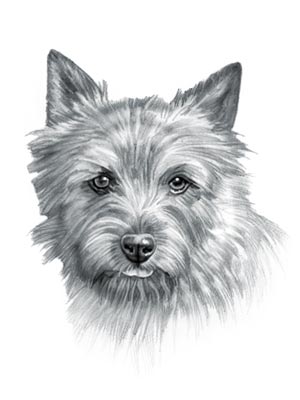
Norfolk Terrier Characteristics: The easy-going and courageous Norfolk Terrier is a breed of small dog classified as a member of the Terrier Dog Group (AKC:1979). The Norfolk Terrier, is characterized by its short, strong, compact appearance with a fear-less expression. Other characteristics include dark, medium sized, oval shaped eyes; small, V-shaped, folded ears that are slightly rounded at the tip; a small, straight, high set tail and a brisk, even gait. The temperament of the Norfolk Terrier can be described as Companionable, Spirited, Fearless. The coat type of the Norfolk Terrier is described as wire-haired coat in assorted colors. Due to its characteristics and qualities, the Norfolk Terrier demonstrated the desired traits of a Watch dog and Hunting Dog and is known by its nick name the "Demon". The origin of the Norfolk Terrier dog breed was in England where it was developed in the 1800's. Fast Facts about the Norfolk Terrier: The following facts provide fast information about the Norfolk Terrier breed. Size: Small *** Breed Group: Terrier Dog Group (AKC:1979) *** Nick name: "Demon" *** Origin: England *** Male Height: 10 inches (25 cm) *** Female Height: Slightly Less *** Male Weight: 11 - 12 pounds (5 - 5.4 kg) *** Female Weight: Slightly Less *** Coat Type: wire-haired coat *** Coat Colors: assorted colors *** Litter Size: 2-5 puppies *** Health Problems: Patellar Luxation *** Lifespan: 12-15 years *** Hypoallergenic: Yes Norfolk Terrier Breed Group and Dog Type - Terrier Dog Group (AKC:1979): The Norfolk Terrier is one of the many breeds of dogs that belong to the Terrier Dog Group (AKC:1979). Other names for the Norfolk Terrier: The Norfolk Terrier is known by the nickname of the "Demon". Other names for this breed of dog include the Anglian Terrier. Origin of the name: The dog is named after the place it was originally bred in Norfolk, an English county in East Anglia. The origin of the word 'terrier' is derived from the Latin word 'terra' meaning "earth" as so many of the terrier breeds were originally bred and trained as hunting dogs to pursue their prey, such as rats, mice, badgers and foxes into their burrows and bolt holes. Norfolk Terrier History and Origin: The country of origin of the Norfolk Terrier breed was in England during the 1800's. The fearless and tenacious Norfolk Terrier was produced by cross breeding the rough coated red or black and tan low- legged Fell Terrier types of breeds such as the Patterdale with other terriers such as the red coated Dandie Dinmont, the Glen of Imaal and Cairn Terrier. The Norfolk Terrier was originally bred as a farm dog and was used to hunt vermin and larger animals such as the fox and the badger. Badger hunting was extremely dangerous as a badger can kill a small terrier with just one bite, many of the courageous Norfolk Terrier dogs were often seen with scars on their faces due to their hunting escapades with both vermin and other animals. The breed was originally referred to as the 'Prick-eared Norwich Terrier' but eventually the Norwich Terrier breeds were separated and our dog was re-named as the Norfolk Terrier. The Norfolk Terrier was officially recognized by the American Kennel Club (AKC) in 1979. Norfolk Terrier Modern History: The modern history of the Norfolk Terriers moved on and the breed is now used as a pet of families with older children and as a sociable companion. Norfolk Terrier Height: This breed is classified as a small sized dog. The height to the shoulder of a male dog is 10 inches (25 cm). The height to the shoulder of a female dog is slightly less. Norfolk Terrier Weight: The weight of this small sized dog, in a male dog is 11 - 12 pounds (5 - 5.4 kg). The weight of the smaller female dog is slightly less than the male. Norfolk Terrier Coat Type - LOW shedding coat: The coat type is described as wire-haired coat. The term "Wire" refers to hair that is coarse and that facial furnishings are present. Norfolk Terrier Coat Colors: The colors of this dog breed consist of assorted colors consisting of Red, Grizzle, Wheaten and Black & Tan. N.B. The term "Red" refers to reddish shades of orange, brown, and tan colors. The word 'Grizzle' refers to gray or partly gray colored hair. Norfolk Terrier Grooming - LOW Grooming Needs: The dog grooming needs of the Norfolk Terriers are categorized as Low in order to maintain a healthy coat and reduce the risk of skin infections. The limited dog grooming needs of Norfolk Terriers are therefore considered to be low maintenance, requiring limited attention to grooming with casual brushing and combing. Dog Grooming needs should also include bathing the dog on a monthly basis and making regular inspections of the eyes, ears, nails and teeth. Norfolk Terrier Litter Size: The litter size of this dog breed ranges from 2-5 puppies. Norfolk Terrier puppies for sale can be obtained reputable breeders and from rescue centers. The cost of Norfolk Terrier puppies varies depending on location, pedigree history and the dog breeder. Norfolk Terrier Temperament and personality: The temperament and personality of this popular dog breed is described as Easy-going, Companionable, Spirited, Fearless and Courageous. Norfolk Terrier Exercise Requirements - LOW Exercise Requirements: The exercise requirements of this breed of dog is low. The Norfolk Terriers require regular daily exercise consisting of approximately 30 minutes to one hour every day. This small dog has a brisk, even gait with small strides and only requires a fairly slow speed by the owner to meet the dogs exercise requirements. Remember that it would take a lot of extra steps by your dog to keep up with your normal walking pace. Norfolk Terrier Diet: Fully grown Norfolk Terriers should be fed twice a day. A diet consisting of a premium dog food can be balanced with fresh food eaten by the family. The question is What Can Dogs Eat?. Check out our comprehensive list of what dogs can and what dogs cannot eat. Norfolk Terrier Health Problems: Potential health problems of the Norfolk Terrier breed include Patellar Luxation . Resolving health problems can prove to be expensive and it is always wise to obtain pet insurance or dog health insurance when buying a dog. Is the Norfolk Terrier dog breed said to be Hypoallergenic? Answer: Yes (Refer to Hypoallergenic Dogs). Norfolk Terrier Lifespan: The life expectancy of dogs vary according to the size, breed of dog and any serious health problems. The typical lifespan of the Norfolk Terriers is 12-15 years. Norfolk Terrier Male Dog Names: Male Dog names are most often chosen to reflect favorite names of the owner or the strength, size, coloring and country of origin of the Norfolk Terrier breed. To give you some inspiration regarding good male Norfolk Terrier names our small selection might be of help with naming boy dogs. Our top male dog names are: Loga *** Isaac *** Archie *** Freddie *** Max *** Finn *** Troy *** Hector *** Jayden *** Sparky. Norfolk Terrier Female Dog Names: Female Dog names tend to be softer, prettier and reflect the temperament of the girl dog. Our top choice of good female Norfolk Terrier names are Poppy *** Isa *** Mia *** Evie *** Florrie *** Lola *** Maisie *** Eliza *** Bella *** Ivy. Fast Facts about the Norfolk Terrier: The following facts provide fast information about the Norfolk Terrier breed. Scientific name: Canis lupus familiaris *** Dog Breed Group: Terriers Dog Group (AKC:1979) *** Size: Small *** Country of Origin: United Kingdom (England) *** History / Date: 1800's *** Male Norfolk Terriers Height: 10 inches (25 cm) *** Male Norfolk Terriers Weight: 11 - 12 pounds (5 - 5.4 kg) *** Coat Type: wire-haired coat *** Litter Size: 2-5 puppies *** Norfolk Terriers Health Problems: Hip dysplasia, thyroid, and joint problems *** Norfolk Terriers Lifespan: 12-15 years *** |