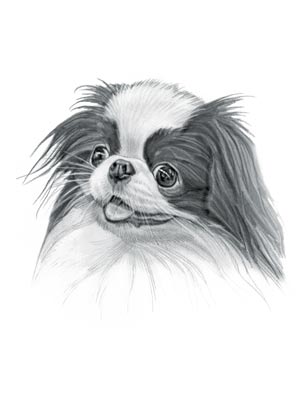
Japanese Chin Characteristics: The fun-loving and spirited Japanese Chin is a breed of small dog classified as a member of the Toy Dog Group (AKC:1888). The Japanese Chin, is characterized by its imperious, stylish appearance with a broad face and startled expression. Other characteristics include large, lustrous, round eyes; long, pendulous, v-shaped ears; a a distinctive puffy tail that curls up and over the back and a light, elegant gait. The temperament of the Japanese Chin can be described as Loyal, Playful, Alert. The coat type of the Japanese Chin is described as flowing & silky coat in assorted colors. Due to its characteristics and qualities, the Japanese Chin demonstrated the desired traits of a Companion and Lapdog and is known by its nick name the "Ornamental Dog". The origin of the Japanese Chin dog breed was in China, not in China as the name indicates, where it was developed in the Ancient Times. Fast Facts about the Japanese Chin: The following facts provide fast information about the Japanese Chin breed. Size: Small *** Breed Group: Toy Dog Group (AKC:1888) *** Nick name: "Ornamental Dog" *** Origin: China *** Male Height: 7 - 11 inches (18 - 28 cm) *** Female Height: Slightly Less *** Male Weight: 4 -15 pounds (2 - 7 kg) *** Female Weight: Slightly Less *** Coat Type: flowing & silky coat *** Coat Colors: assorted colors *** Litter Size: 1-3 puppies *** Health Problems: Entropion, Patellar Luxation, Breathing difficulties *** Lifespan: 12-14 years *** Hypoallergenic: No Japanese Chin Breed Group and Dog Type - Toy Dog Group (AKC:1888): The Japanese Chin is one of the many breeds of dogs that belong to the Toy Dog Group (AKC:1888). Other names for the Japanese Chin: The Japanese Chin is known by the nickname of the "Ornamental Dog". Other names for this breed of dog include the Japanese Spaniel and Chin. Origin of the name: The origin of the name "Japanese Chin" derives from the little Chinese dog being given from China to the Emperor of Japan. The word 'chin' is derived from the ancient Ch'in Dynasty (221 - 206 B.C.) Japanese Chin History and Origin: The country of origin of the Japanese Chin breed was in China during Ancient Times and is believed to date back to the historically important, but short lived Ch'in Dynasty (221 - 206 B.C.) more commonly referred to as the Qin dynasty, the first dynasty of Imperial China (the name "China" is derived from the name Qin ("Ch'in" in former Latinization writing systems). The Chinese 'Chin' dog was a favorite of the Emperors and nobles of the Imperial Court, and like the Pekingese, descends from the ancient Chinese Happa Dog. Buddhism forbids the trade of living animals so Chinese dogs were only given as gifts to honored guests and emissaries. By the 1st century AD, the Chinese had made contacts with Japan during the Japanese Yayoi period. It is not known when the first Chinese dogs were presented to Japan as royal gifts but the tiny dogs that would become known as the 'Japanese Chin' were used to warm the laps and hands of the ladies of the Imperial Palace of Japan. The Japanese Chin remained unknown to the western world until 1853 when Commodore Matthew Perry (1794-1858) opened diplomatic and trade relations between the United States and Japan. In 1853 pair of Japanese Chin dogs were given as gifts to US President Franklin Pierce and Queen Victoria from Commodore Matthew Perry. The Japanese Chin was originally referred to as a 'Japanese Spaniel' and became popular in the United States and Great Britain. The Japanese Chin was officially recognized by the American Kennel Club (AKC) in 1888. Japanese Chin Modern History: The modern history of the Japanese Chin moved on and the 'Japanese Spaniel' was renamed "Japanese Chin" by the AKC in 1977. The breed is still enjoyed as as a favorite family pet and playful companion. Japanese Chin Height: The Japanese Chin breed is classified as a small sized dog. The height to the shoulder of a male dog is 7 - 11 inches (18 - 28 cm). The height to the shoulder of a female dog is slightly less. Japanese Chin Weight: The weight of the small sized Japanese Chin, in a male dog is 4 -15 pounds (2 - 7 kg). The weight of the smaller female dog is slightly less than the male. Japanese Chin Coat Type - LOW shedding coat: The coat type is described as flowing & silky coat. Japanese Chin Coat Colors: The colors of the Japanese Chin dog breed consist of assorted colors consisting of black and white, red and white, lemon and white. brown and white or black and white with tan points. N.B. The term "Red" refers to reddish shades of orange, brown, and tan colors. Japanese Chin Grooming - MODERATE Grooming Needs: The dog grooming needs of the Japanese Chin is not extensive and therefore categorized as Moderate in order to maintain a healthy coat, reducing the risk of skin infections. The modest grooming needs of the Japanese Chin is considered to be mid-maintenance requiring weekly brushing and combing. Dog Grooming Requirements should include bathing the dog on a monthly basis and making regular inspections of the teeth, eyes, nails and ears. Japanese Chin Litter Size: The litter size of this dog breed ranges from 1-3 puppies. Japanese Chin puppies for sale can be obtained reputable breeders and from rescue centers. The cost of Japanese Chin puppies varies depending on location, pedigree history and the dog breeder. Japanese Chin Temperament and personality: The temperament and personality of the popular Japanese Chin dog breed is described as Fun-loving, Loyal, Playful, Alert and Spirited. Japanese Chin Exercise Requirements - LOW Exercise Requirements: The exercise requirements of this breed of dog is low. The Japanese Chin requires daily exercise consisting of approximately 30 minutes every day. The small Japanese Chin has a light, elegant gait with small strides and only requires a fairly slow speed by the owner to meet the dogs exercise requirements. Remember that it would take a lot of extra steps by your dog to keep up with your normal walking pace. Japanese Chin Diet: A fully grown Japanese Chin should be fed twice a day. A diet consisting of a premium dog food can be balanced with fresh food eaten by the family. The question is What Can Dogs Eat?. Check out our comprehensive list of what dogs can and what dogs cannot eat. Japanese Chin Health Problems: Potential health problems of the Japanese Chin breed include Entropion, Patellar Luxation, Breathing difficulties . Resolving health problems can prove to be expensive and it is always wise to obtain pet insurance or dog health insurance when buying a dog. Is the Japanese Chin dog breed said to be Hypoallergenic? Answer: No. Japanese Chin Lifespan: The life expectancy of dogs vary according to the size, breed of dog and any serious health problems. The typical lifespan of the Japanese Chin breed is 12-14 years. Japanese Chin Male Dog Names: Male Dog names are most often chosen to reflect favorite names of the owner or the strength, size, coloring and country of origin of the Japanese Chin breed. To give you some inspiration regarding good male Japanese Chin names our small selection might be of help with naming boy dogs. Our top male dog names are: Konyo *** Akio *** Seiji *** Chikao *** Eiichi *** Shoyo *** Bokkai *** Masato *** Toshiki *** Fumio *** Kazu. Japanese Chin Female Dog Names: Female Dog names tend to be softer, prettier and reflect the temperament of the Japanese Chin girl dog. Our top choice of good female Japanese Chin names are Chiyo *** Akina *** Ginko *** Hiroko *** Fujiko *** Kuri *** Nami *** Yama *** Mura *** Sama. Fast Facts about the Japanese Chin: The following facts provide fast information about the Japanese Chin breed. Scientific name: Canis lupus familiaris *** Dog Breed Group: Toy Dog Group (AKC:1888) *** Size: Small *** Country of Origin: China *** History / Date: Ancient Times *** Male Japanese Chin Height: 7 - 11 inches (18 - 28 cm) *** Male Japanese Chin Weight: 4 -15 pounds (2 - 7 kg) *** Coat Type: flowing & silky coat *** Japanese Chin Litter Size: 1-3 puppies *** Japanese Chin Health Problems: Hip dysplasia, thyroid, and joint problems *** Japanese Chin Lifespan: 12-14 years *** |