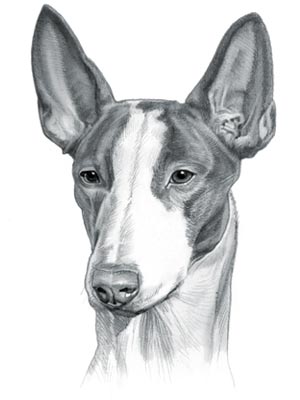
Ibizan Hound Characteristics: The noble and athletic Ibizan Hound is a breed of large dog classified as a member of the Hound Dog Group (AKC:1978), a Sighthound. The Ibizan Hound, is characterized by its majestic, tall, sleek appearance with a long muzzle and an aloof, inquisitive expression. Other characteristics include small, clear, amber colored, almond-shaped, slanting eyes; large, erect ears and a long, hovering gait. The temperament of the Ibizan Hound can be described as Active, Engaging, Stubborn. The coat type of the Ibizan Hound is described as long & wiry or short & smooth coat in white, red colors. Due to its characteristics and qualities, the Ibizan Hound demonstrated the desired traits of a Hunting Dog and is known by its nick name the "Hannibal's Sighthound". The origin of the Ibizan Hound dog breed was in Spain where it was developed in the Ancient Times. Fast Facts about the Ibizan Hound: The following facts provide fast information about the Ibizan Hound breed. Size: Large *** Breed Group: Hound Dog Group (AKC:1978), a Sighthound *** Nick name: "Hannibal's Sighthound" *** Origin: Spain *** Male Height: 22 - 29 inches (56 - 74 cm) *** Female Height: Slightly Less *** Male Weight: 42 - 55 pounds (19 - 25 kg) *** Female Weight: Slightly Less *** Coat Type: long & wiry or short & smooth coat *** Coat Colors: white, red colors *** Litter Size: 6-12 puppies *** Health Problems: None *** Lifespan: 12-14 years *** Hypoallergenic: No Ibizan Hound Breed Group and Dog Type - Hound Dog Group (AKC:1978), a Sighthound: The Ibizan Hound is one of the many breeds of dogs that belong to the Hound Dog Group (AKC:1978), a Sighthound. Other names for the Ibizan Hound: The Ibizan Hound is known by the nickname of the "Hannibal's Sighthound". Other names for this breed of dog include the Beezer, Podenco Ibicenco and Ibizan Warren Hound. Origin of the name: The origin of the name "Ibizan Hound" derives from its country of origin, Ibiza, one of the Spanish Balearic Islands. Ibizan Hound - Sighthound: The Ibizan Hound is a Sighthound, one of the hunting dog breeds, built for speed and agility with excellent eyesight to track small and large game, especially hare and rabbits. Ibizan Hound History and Origin: The country of origin of the Ibizan Hound breed was in Spain dating back to antiquity. The Ibizan Hound bears a striking resemblance to the Pharaoh Hound and it is believed that the two strains come from the same breed. The ancestors of the Ibizan Hound were therefore the hunting dogs kept by the Ancient Egyptians that are depicted in hieroglyphs and in the tombs of pharaohs dating back to 3100BC. The famous, indisputable images of the Ancient Egyptian god Anubis are depicted as having the body of a man and the distinctive head of a dog, whose similarity to the modern Ibizan Hound and Pharaoh Hound is unmistakable. The Ibizan Hound found their way to Europe around 700-900 BC with the ancient, sea-faring Phoenician traders and the breed was developed in the Spanish Balearic Island of Ibiza. The Ibizans bred their Ibizan Hound as a hunting dog that used its excellent eyesight to used to hunt rabbit and hares in both night and day. The Ibizan Hound was trained to bring the animals back to the hunter, much like a retriever. Ibizan Hound Modern History: The modern history of the Ibizan Hound moved on and the breed is now used as an active, athletic family pet and attractive companion. The Ibizan Hound was officially recognized by the American Kennel Club (AKC) in 1978. Ibizan Hound Height: The Ibizan Hound breed is classified as a large sized dog. The height to the shoulder of a male dog is 22 - 29 inches (56 - 74 cm). The height to the shoulder of a female dog is slightly less. Ibizan Hound Weight: Not surprisingly for a large sized dog, the weight of a male dog is 42 - 55 pounds (19 - 25 kg). The weight of the smaller female dog is slightly less than the male. Ibizan Hound Coat Type - LOW shedding coat: The coat type is described as a long & wiry or short & smooth coat. The term "Wire" refers to coarse hair. Ibizan Hound Coat Colors: The colors of this dog breed include white, red and fawn colors. N.B. The term "Red" refers to reddish shades of orange, brown, and tan colors. Ibizan Hound Grooming - LOW Grooming Needs: The grooming needs of the Ibizan Hound are categorized as Low in order to maintain a healthy, tangle-free coat and reduce the risk of skin infections. The limited grooming needs of the Ibizan Hound are considered to be low maintenance, requiring limited attention to grooming where brushing and combing, is concerned. Grooming Requirements should include bathing the dog on a monthly basis and making regular inspections of the nails, teeth, eyes and ears. Ibizan Hound Litter Size: The litter size of this dog breed ranges from 6-12 puppies. Ibizan Hound puppies for sale can be obtained reputable breeders and from rescue centers. The cost of Ibizan Hound puppies varies depending on location, pedigree history and the dog breeder. Ibizan Hound Temperament and personality: The temperament and personality of this popular dog breed is described as Noble, Active, Engaging, Stubborn and Athletic. Ibizan Hound Exercise Requirements - HIGH Exercise Requirements: The exercise requirements of this breed of dog is high. The Ibizan Hound requires regular daily exercise consisting of approximately one to two hours each day. This large, powerful dog has a long, hovering strident gait with strides of a moderate length and requires a brisk walking speed or jogging by the owner to meet the dogs exercise requirements. Ibizan Hound Diet: A fully grown Ibizan Hound should be fed twice a day. A diet consisting of a premium dog food can be balanced with fresh food eaten by the family. The question is What Can Dogs Eat?. Check out our comprehensive list of what dogs can and what dogs cannot eat. Ibizan Hound Health Problems: Potential health problems of the Ibizan Hound breed have shown no recurring problems. Resolving health problems can prove to be expensive and it is always wise to obtain pet insurance or dog health insurance when buying a dog. Is the Ibizan Hound dog breed said to be Hypoallergenic? Answer: No. Ibizan Hound Lifespan: The life expectancy of dogs vary according to the size, breed of dog and any serious health problems. The typical lifespan of the Ibizan Hound breed is 12-14 years. Ibizan Hound Male Dog Names: Male Dog names are most often chosen to reflect favorite names of the owner or the strength, size, coloring and country of origin of the Ibizan Hound breed. To give you some inspiration regarding good male Ibizan Hound names our small selection might be of help with naming boy dogs. Our top male dog names are: Alba *** Guido *** Hector *** Manuel *** Rico *** Santo *** Jax *** Jago *** Frisco *** Chico. Ibizan Hound Female Dog Names: Female Dog names tend to be softer, prettier and reflect the temperament of the girl dog. Our top choice of good female Ibizan Hound names are Alma *** Chica *** Bella *** Kiki *** Lali *** Neva *** Vina *** Yadra *** Zita *** Tea *** Lora. Fast Facts about the Ibizan Hound: The following facts provide fast information about the Ibizan breed. Scientific name: Canis lupus familiaris *** Dog Breed Group: Hounds Group (AKC:1978), a Sighthound *** Size: Large *** Country of Origin: Spain *** History / Date: Ancient Times *** Male Ibizan dog Height: 22 - 29 inches (56 - 74 cm) *** Male Ibizan dog Weight: 42 - 55 pounds (19 - 25 kg) *** Coat Type: long & wiry or short & smooth coat *** Litter Size: 6-12 puppies *** Ibizan dog Health Problems: Hip dysplasia, thyroid, and joint problems *** Ibizan Hound Lifespan: 12-14 years *** |