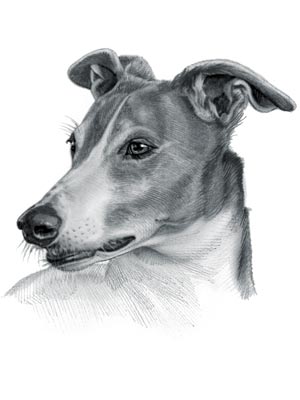
Greyhound Dog Characteristics: The athletic and composed Greyhound Dog is a breed of large dog classified as a member of the Hound Group (AKC:1885), a Sighthound. The Greyhound, is characterized by its sleek, elegant, slender appearance with an alert, agile expression. Other characteristics include dark, medium sized, oval shaped eyes; small, folded ears; a low-set, tapering tail and an efficient, speedy gait. The temperament of the Greyhound Dog can be described as Affectionate, Even Tempered, Intelligent. The coat type of the Greyhound is described as short, smooth coat in assorted colors. Due to its characteristics and qualities, the Greyhound Dog demonstrated the desired traits of a Hunting Dog and is known by its nick name the "Fastest Dog on Earth". The origin of the Greyhound Dog breed was in United Kingdom where it was developed in the Dark Ages. Fast Facts about the Greyhound Dog: The following facts provide fast information about the Greyhound breed. Size: Large *** Breed Group: Hound Dog Group (AKC:1885), a Sighthound *** Nick name: "Fastest Dog on Earth" *** Origin: United Kingdom *** Male Height: 28 - 30 inches (71 - 76 cm) *** Female Height: 27 - 28 inches (68 - 71 cm) *** Male Weight: 65 - 80 pounds (29 - 36 kg) *** Female Weight: 60 - 70 pounds (27- 31 kg) *** Coat Type: short, smooth coat *** Coat Colors: assorted colors *** Litter Size: 1-12 puppies (Average 7) *** Health Problems: None *** Lifespan: 10-13 years *** Hypoallergenic: No Greyhound Dog Breed Group and Dog Type - Hound Dog Group (AKC:1885), a Sighthound: The Greyhound Dog is one of the many breeds of dogs that belong to the Hound Dog Group (AKC:1885) - a Sighthound. Other names for the Greyhound Dog: The Greyhound Dog is known by the nickname of the "Fastest Dog on Earth". Other names for this breed of dog include the English Greyhound and the Racer. The Greyhound is the Fastest Dog in the World: The long, lean Greyhound is the fastest dog in the world, capable of speeds of 43mph (70 kilometres per hour), with impressive powers of acceleration. A smaller version of the Greyhound is the Whippet. Origin of the name Greyhound: The origin of the name "Greyhound" derives from the Old English 'grighund', the word 'grig' meaning to "savagely take hold of" and 'hund' meaning dog. The first part of the name has nothing to do with color of the dog's coat, as most of greyhounds are not gray. Greyhound - Sighthound: The Greyhound is a Sighthound, one of the hunting dog breeds, built for speed and agility with excellent eyesight to track small and small game, especially rabbits, hares and large game including deer and wolves. Greyhound History and Origin: The country of origin of the Greyhound breed was in United Kingdom during the Dark Ages. However, the ancestors of the breed date back to Antiquity. In Egypt, mummified dogs, very similar to a small Greyhound have been found in Ancient Egyptian tombs. These Ancient Egyptian dogs found their way across Europe with Phoenician traders. The Greyhound was bred and raised by the English aristocracy and the nobility. For nearly 700 years it was illegal under English law (Game Acts of 1485 and 1604) for a commoner to own a greyhound. The 1831 Game Act relaxed some of the restrictions but required any person using any dog, net or gun for pursuing or killing any game, woodcock, snipe or coney [rabbit] or any deer must take out a licence to kill game. Greyhound History - John Meyrick: One of the earliest descriptions of the Greyhound was in the book "House Dogs and Sporting Dogs", published in 1861 by John Meyrick. In the section on the Greyhound, Meyrick stated that "Until the alteration of our game laws in 1831, when great difficulties and restrictions lying in the way of persons who kept Greyhounds were removed, many distinct strains were jealously preserved in the kennels of the privileged few, who alone possessed greyhounds" and went on to say that "since the abolition of these restrictions, the number of dogs had increased to a remarkable degree". Greyhound History - 1831 Game Act: The 1831 Game Act relaxed some of the restrictions but required any person using any dog, net or gun for pursuing or killing any game, woodcock, snipe or coney [rabbit] or any deer must take out a licence to kill game. Greyhound History - Hare Coursing: The Greyhound was used to hunt small game, especially hares, and by the mid 1800's the coursing of hares had developed into an organized blood sport. The Greyhound was trained in Hare coursing which involved the dog chasing turning and killing the animal, rather than just catching the prey. The dogs were starved beforehand so the hares were often ripped to shreds when they were caught. Greyhound Dog Modern History - Greyhound Racing: The modern history of the Greyhound Dog moved on and the Greyhound was officially recognized by the American Kennel Club (AKC) in 1885. Hare Coursing went into decline due, in part, to the introduction of greyhound racing and betting. In 1912 Owen Patrick Smith (1869-1927) invented the mechanical rabbit for use on track, and greyhound racing became a popular spectator sport. The breed continues to be employed in racing but is also enjoyed as a family pet and companion. Unfortunately, illegal Hare Coursing competitions continue to the modern day. Greyhound Dog - Santa's Little Helper: One of the most famous Greyhound dogs in the world is the cartoon character "Santa's Little Helper" who features in 'The Simpsons' animated television series. The cartoon character "Santa's Little Helper" first appeared in 1989 in the Christmas TV special "Simpsons Roasting on an Open Fire" in which Homer and Bart adopt the abandoned greyhound. This famous, mischievous greyhound has remained a firm favorite with kids and adults ever since. Greyhound Height: The Greyhound breed is classified as a large sized dog. The height to the shoulder of a male dog is 28 - 30 inches (71 - 76 cm). The height to the shoulder of a female dog is 27 - 28 inches (68 - 71 cm). Greyhound Weight: Not surprisingly for a large sized dog, the weight of a male dog is 65 - 80 pounds (29 - 36 kg). The weight of the smaller female dog is 60 - 70 pounds (27- 31 kg). Greyhound Coat Type - LOW shedding coat: The coat type of the Greyhound is described as a short, smooth coat. Greyhound Coat Colors: The colors of the Geyhound dog breed consist of assorted colors consisting of Black, White, Fawn, Brindle, Blue and Red. N.B. Brindle is a brownish or tawny color. The word "Blue" is used to describe a cool-toned, metallic gray color. The term "Red" refers to reddish shades of orange, brown, and tan colors. Greyhound Grooming - LOW Grooming Needs: The grooming needs of the Greyhound are categorized as Low in order to maintain a healthy, tangle-free coat and reduce the risk of skin infections. The limited grooming needs of the Greyhound are considered to be low maintenance, requiring limited attention to grooming where brushing and combing, is concerned. Grooming Requirements should include bathing the dog on a monthly basis and making regular inspections of the nails, teeth, eyes and ears. Greyhound Dog Litter Size: The litter size of this dog breed ranges from 1-12 puppies (Average 7). Greyhound puppies for sale can be obtained reputable breeders and from rescue centers. The cost of Greyhound puppies varies depending on location, pedigree history and the dog breeder. Greyhound Temperament and personality: The temperament and personality of this popular dog breed is described as Athletic, Affectionate, Even Tempered, Intelligent and Composed. Greyhound Exercise Requirements - HIGH Exercise Requirements: The exercise requirements of this breed of dog is high. The Greyhound requires regular daily exercise consisting of approximately one to two hours each day. This large, athletic dog has an efficient, speedy gait with strides of a moderate length and requires a brisk walking speed or jogging by the owner to meet the dogs exercise requirements. Greyhound Diet: A fully grown Greyhound should be fed twice a day. A diet consisting of a premium dog food can be balanced with fresh food eaten by the family. The question is What Can Dogs Eat?. Check out our comprehensive list of what dogs can and what dogs cannot eat. Greyhound Health Problems: Potential health problems of the Greyhound breed have shown no recurring problems. Resolving health problems can prove to be expensive and it is always wise to obtain pet insurance or dog health insurance when buying a dog. Is the Greyhound Dog breed said to be Hypoallergenic? Answer: No. Greyhound Lifespan: The life expectancy of dogs vary according to the size, breed of dog and any serious health problems. The typical lifespan of the Greyhound Dog breed is 10-13 years. Greyhound Male Dog Names: Male Dog names are most often chosen to reflect favorite names of the owner or the strength, size, coloring and country of origin of the Greyhound Dog breed. To give you some inspiration regarding good male Greyhound Dog names our small selection might be of help with naming boy dogs. Our top male dog names are: Swifty *** Riley *** Oscar *** Archie *** Apollo *** Prince *** Jake *** Sammy *** Gus *** Dylan. Greyhound Dog Female Names: Female Dog names tend to be softer, prettier and reflect the temperament of the girl dog. Our top choice of good female Greyhound Dog names are Lacey *** Sandy *** Bella *** Cinders *** Lily *** Penny *** Zara *** Lola *** Honey *** Venus. Fast Facts about the Greyhound: The following facts provide fast information about the Greyhound breed. Scientific name: Canis lupus familiaris *** Breed Group: Hound Dog Group (AKC:1885), a Sighthound *** Size: Large *** Country of Origin: United Kingdom *** History / Date: Dark Ages *** Male Greyhound Height: 28 - 30 inches (71 - 76 cm) *** Male Greyhound Weight: 65 - 80 pounds (29 - 36 kg) *** Coat Type: short, smooth coat *** Litter Size: 1-12 puppies (Average 7) *** Greyhound Health Problems: Hip dysplasia, thyroid, and joint problems *** Greyhound Lifespan: 10-13 years *** |