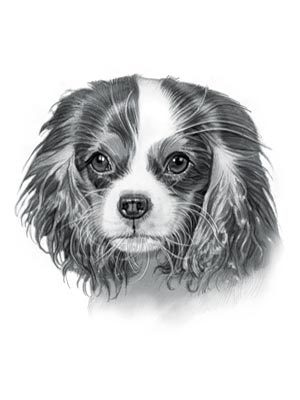
English Toy Spaniel Characteristics: The sweet-tempered and genial English Toy Spaniel is a breed of small dog classified as a member of the Toy Dog Group (AKC:1886). The English Toy Spaniel, is characterized by its appealing appearance with a a silky, flowing coat, rounded head and soft, gentle expression. Other characteristics include dark, square set eyes; large, long, pendulous ears; a square shaped body and a straight, lively gait. The temperament of the English Toy Spaniel can be described as Gentle, Affectionate, Reserved. The coat type of the English Toy Spaniel is described as long, silky, glossy coat in assorted colors. Due to its characteristics and qualities, the English Toy Spaniel demonstrated the desired traits of a Bird flushing and lapdog and is known by its nick name the "Mary, Queen of Scots Lapdog". The origin of the English Toy Spaniel dog breed was in United Kingdom (England) where it was developed in the 1600's. Fast Facts about the English Toy Spaniel: The following facts provide fast information about the English Toy Spaniel breed. Size: Small *** Breed Group: Toy Dog Group (AKC:1886) *** Nick name: "Mary, Queen of Scots Lapdog" *** Origin: United Kingdom (England) *** Male Height: 9-11 inches (23-28 cm) *** Female Height: Slightly Less *** Male Weight: 8-14 pounds (3.6-6.4 kg) *** Female Weight: Slightly Less *** Coat Type: long, silky, glossy coat *** Coat Colors: assorted colors *** Litter Size: 2-4 puppies *** Health Problems: Patellar Luxation, Eye Infections, Heart murmurs *** Lifespan: 10-12 years *** Hypoallergenic: No English Toy Spaniel Breed Group and Dog Type - Toy Dog Group (AKC:1886): The English Toy Spaniel is one of the many breeds of dogs that belong to the Toy Dog Group (AKC:1886). Origin of the name: The name 'spaniel' originated in Spain and referred to a surname meaning "Spaniard". It was then transferred as a name for a breed of dog supposedly of Spanish origin. The spanial breed was extensively developed in Great Britain in the 1600's, but the name retained its Spanish connotation. Other names for the English Toy Spaniel: The English Toy Spaniel is known by the nickname of the "Mary, Queen of Scots Lapdog". Other names for this breed of dog include the Prince Charles Spaniel, Ruby Spaniel, Blenheim Spaniel and Spanial English Toy Spaniel History and Origin: The country of origin of the English Toy Spaniel breed was in United Kingdom (England) during the 1600's and was an ancestor of the Cavalier King Charles Spaniel. The popularity of the English Toy Spaniel and its connection to the royal houses of the Tudors, Elizabethan and Stuarts dates back to a decree by King Henry VIII (1491 – 1547) in the Eltham Ordinances of January 1526. In order to improve the cleanliness of the court the law stated that no dogs were allowed at Court except for "some small spanyells for the ladies" so the court could be "sweete, wholesome and cleane". The English Toy Spaniel dogs kept at the royal courts were referred to as "Comforters". This was a particularly apt name as the small dogs were used to warm their owners by sitting on the ladies laps in chilly castles and palaces, warming their beds at night and would warm their feet on long carriage journeys. In 1570 Dr. John Caius (1510 - 1573), the physician of Queen Elizabeth I and the founder of Caius College Cambridge, wrote a study of British dogs called "De Canibus Britannicus". The third group specifying details of species was devoted entirely to the 'Spaniell Gentle' or the 'Comforter'. The different varieties if the breed, the Ruby, Blenheim and Prince Charles Spaniels, all bred at Blenheim Palace the seat of John Churchill, 1st Duke of Marlborough (1650 – 1722), reflected the varying coat colors. The different varieties, some of which had been cross bred with the Pug, were merged and all named the English Toy Spaniel breed. The English Toy Spaniel was officially recognized by the American Kennel Club (AKC) in 1886. English Toy Spaniel History - Mary Queen of Scots: When Mary Queen of Scots, the cousin of Queen Elizabeth I, was executed at Fotheringay Castle, Northamptonshire, on 8 February 1587 her small black and white dog, believed to be an English Toy Spaniel, accompanied her to the scaffold. Following her brutal beheading the little dog was found hiding under her blood spattered petticoats. Some erroneously refer to Mary Queen of Scots dog as a Skye Terrier. Mary Queen of Scots loved her dogs which were said to include a number of lapdogs such as Spaniels, Pugs and the Maltese Terrier - a Skye terrier is a larger dog, used for hunting rather than as a lapdog. English Toy Spaniel Modern History: The modern history of the English Toy Spaniel moved on and the breed is now used as an affectionate family pet that is easy to train, and loves children. English Toy Spaniel Height: The English Toy Spaniel breed is classified as a small sized dog. The height to the shoulder of a male dog is 9-11 inches (23-28 cm). The height to the shoulder of a female dog is slightly less. English Toy Spaniel Weight: The weight of this small sized dog, in a male dog is 8-14 pounds (3.6-6.4 kg). The weight of the smaller female dog is slightly less than the male. English Toy Spaniel Coat Type - LOW shedding coat: The coat type is described as a long, silky, glossy coat. English Toy Spaniel Coat Colors: The colors of the English Toy Spaniel dog breed consist of assorted colors consisting of Blenheim, Tri-color, Ruby and Black & Tan. N.B. The term 'Blenheim' refers to the red and white colors of the Blenheim Spaniel that was developed at Blenheim Palace, the seat of the Duke of Marlborough, England. N.B. The term "Red" refers to reddish shades of orange, brown, and tan colors. English Toy Spaniel Grooming - LOW Grooming Needs: The grooming needs of the English Toy Spaniel are categorized as Low in order to maintain a healthy, tangle-free coat and reduce the risk of skin infections. The limited grooming needs of the English Toy Spaniel are considered to be low maintenance, requiring limited attention to grooming where brushing and combing, is concerned. Grooming Requirements should include bathing the dog on a monthly basis and making regular inspections of the nails, teeth, eyes and ears. English Toy Spaniel Litter Size: The litter size of this dog breed ranges from 2-4 puppies. English Toy Spaniel puppies for sale can be obtained reputable breeders and from rescue centers. The cost of English Toy Spaniel puppies varies depending on location, pedigree history and the dog breeder. English Toy Spaniel Temperament and personality: The temperament and personality of the popular English Toy Spaniel dog breed is described as Sweet-tempered, Gentle, Affectionate, Reserved and Genial. English Toy Spaniel Exercise Requirements - LOW Exercise Requirements: The exercise requirements of this breed of dog is low. The English Toy Spaniel requires regular daily exercise consisting of approximately 30 minutes to one hour every day. This small dog has a fluid, straight gait with small strides and only requires a fairly slow speed by the owner to meet the dogs exercise requirements. Remember that it would take a lot of extra steps by your dog to keep up with your normal walking pace. English Toy Spaniel Diet: A fully grown English Toy Spaniel should be fed twice a day. A diet consisting of a premium dog food can be balanced with fresh food eaten by the family. The question is What Can Dogs Eat?. Check out our comprehensive list of what dogs can and what dogs cannot eat. English Toy Spaniel Health Problems: Potential health problems of the English Toy Spaniel breed include Patellar Luxation, Eye Infections, Heart murmurs. Resolving health problems can prove to be expensive and it is always wise to obtain pet insurance or dog health insurance when buying a dog. Is the English Toy Spaniel dog breed said to be Hypoallergenic? Answer: No. English Toy Spaniel Lifespan: The life expectancy of dogs vary according to the size, breed of dog and any serious health problems. The typical lifespan of the English Toy Spaniel breed is 10-12 years. English Toy Spaniel Male Dog Names: Male Dog names are most often chosen to reflect favorite names of the owner or the strength, size, coloring and country of origin of the English Toy Spaniel breed. To give you some inspiration regarding good male English Toy Spaniel names our small selection might be of help with naming boy dogs. Our top male dog names are: Dinky *** Peanut *** Doodle *** Shorty *** Junior *** Pip *** Bugsy *** Rascal *** Button *** Pumpkin. English Toy Spaniel Female Dog Names: Female Dog names tend to be softer, prettier and reflect the temperament of the English Toy Spaniel girl dog. Our top choice of good female English Toy Spaniel names are Chrystee *** Tanta *** Tem *** Maggie *** Shelby *** Tootsie *** Sammy *** Rosie *** Duchess *** Vicki *** Daisy. Fast Facts about the English Toy Spaniel: The following facts provide fast information about the English Toy Spaniel breed. Scientific name: Canis lupus familiaris *** Dog Breed Group: Toy Dog Group (AKC:1886) *** Size: Small *** Country of Origin: United Kingdom (England) *** History / Date: 1600's *** Male English Toy Spaniel Height: 9-11 inches (23-28 cm) *** Male English Toy Spaniel Weight: 8-14 pounds (3.6-6.4 kg) *** Coat Type: long, silky, glossy coat *** Litter Size: 2-4 puppies *** English Toy Spaniel Health Problems: Hip dysplasia, thyroid, and joint problems *** English Toy Spaniel Lifespan: 10-12 years *** |