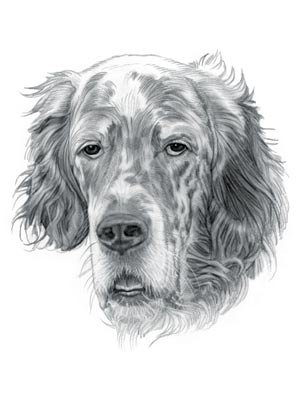
English Setter Characteristics: The determined and outgoing English Setter is a breed of large dog classified as a member of the Sporting Dog Group (AKC:1884). The English Setter, is characterized by its elegant, silky, flexed appearance with a long, lean head and intelligent expression. Other characteristics include dark brown, bright eyes; medium length, dropped ears; strong muscular hindquarters and a graceful gait. The temperament of the English Setter can be described as Strong Willed, Sociable, Gentle. The coat type of the English Setter is described as medium, flat, soft coat in assorted colors. Due to its characteristics and qualities, the English Setter demonstrated the desired traits of a Bird setter and retrieving dog and is known by its nick name the "Laverack Setter". The origin of the English Setter dog breed was in United Kingdom (England) where it was developed in the 1400's. Fast Facts about the English Setter: The following facts provide fast information about the English Setter breed. Size: Large *** Breed Group: Sporting Dog Group (AKC:1884) *** Nick name: "Dog who Sits" *** Origin: United Kingdom (England) *** Male Height: 24 - 27 inches (61 - 69 cm) *** Female Height: 23 - 26 inches (58 - 66 cm) *** Male Weight: 55 - 80 pounds (25 - 36 kg) *** Female Weight: 45 - 70 pounds (20 - 32 kg) *** Coat Type: medium, flat, soft coat *** Coat Colors: assorted colors *** Litter Size: 4-6 puppies *** English Setter Health Problems: Deafness, Elbow Dysplasia *** Lifespan: 10-12 years *** Hypoallergenic: No English Setter Breed Group and Dog Type - Sporting Dog Group (AKC:1884): The English Setter is one of the many breeds of dogs that belong to the Sporting Dog Group (AKC:1884). Other names for the English Setter: The English Setter is known by the nickname of the "Laverack Setter". Origin of the name English Setter: The origin of the name "English Setter" derives from its country of origin in England and its early role in assisting hunters by crouching, or setting down in front of game preventing the escape of the quarry, until the hunter arrived and could throw a net over the game bird. English Setter History and Origin: The country of origin of the English Setter breed was in United Kingdom (England) during the 1400's. The ancestors of the English Setter were early hunting dogs and Water Spaniels. This early English breed of dogs were originally referred to as a "Setting Spaniels". The historical use of Setting Spaniels was described by Dame Juliana Berners in the 1486 publication of the 'Book of Saint Albans' in her treatise on hunting. The training of dogs was so important that binding contracts (bonds) were signed such as one signed in 1685 in which a yeoman called John Harris from Worcester agreed to train a spaniel for Sir Henry Herbert (1595–1673) of the manor of Ribbesford to "set partridges, pheasants and other game for ten shillings". In 1825 an English dog breeder named Sir Edward Laverack (1798-1877) developed the pure English Setter that 'set' game birds in a more upright stance than was usual. The Laverack Setter was taller, more lightly built than the earlier dogs and formed the basis of the English Setter breed standard that was written in 1872. He bred out the trait of crouching down to the more upright stance, so the dogs would be easier seen by the hunters who by this time were using guns. The roles of the calm, versatile English Setter included tracking, retrieving, pointing and the breed was also used as a watchdog and Gun Dog (Bird Dog). The English Setter was exported to the United States and was officially recognized by the American Kennel Club (AKC) in 1884. English Setter Modern History: The modern history of the English Setter moved on and the breed is now enjoyed as an energetic family pet that need lots of exercise and the freedom to run. For additional information about Setters also refer to the Irish Setter and the Gordon Setter. English Setter History - Banjo (1947 movie): An English Setter featured in the 1947 RKO movie playing the title role of "Banjo" who saves his young mistress from a bobcat attack. English Setter Height: The English Setter breed is classified as a large sized dog. The height to the shoulder of a male dog is 24 - 27 inches (61 - 69 cm). The height to the shoulder of a female dog is 23 - 26 inches (58 - 66 cm). English Setter Weight: Not surprisingly for a large sized dog, the weight of an English Setter male dog is 55 - 80 pounds (25 - 36 kg). The weight of the smaller female dog is 45 - 70 pounds (20 - 32 kg). English Setter Coat Type: The coat type of the English Setter is described as medium, flat, soft coat. English Setter Coat Colors: The colors of this dog breed consist of assorted colors consisting of Orange Belton, Lemon Belton, Liver Belton, Blue Belton and Chestnut Belton. N.B. The term "Belton" refers to a finely mottled, blended, flecked, or combination of any two colors, especially white. Belton is located in Northumberland, England, where setters were bred. English Setter Grooming - MODERATE Grooming Needs: The dog grooming needs of the English Setter is not extensive and therefore categorized as Moderate in order to maintain a healthy coat, reducing the risk of skin infections. The modest grooming needs of the English Setter is considered to be mid-maintenance requiring weekly brushing and combing. Dog Grooming Requirements should include bathing the dog on a monthly basis and making regular inspections of the teeth, eyes, nails and ears. English Setter Litter Size: The litter size of this dog breed ranges from 4-6 puppies. English Setter puppies for sale can be obtained reputable breeders and from rescue centers. The cost of English Setter puppies varies depending on location, pedigree history and the dog breeder. English Setter Temperament and personality: The temperament and personality of the popular English Setter dog breed is described as Determined, Strong Willed, Sociable, Gentle and Outgoing. English Setter Exercise Requirements - HIGH Exercise Requirements: The exercise requirements of this breed of dog is high. The English Setter requires regular daily exercise consisting of approximately one to two hours each day. This large, powerful dog has a fluid, graceful gait with strides of a moderate length and requires a brisk walking speed or jogging by the owner to meet the dogs exercise requirements. English Setter Diet: A fully grown English Setter should be fed twice a day. A diet consisting of a premium dog food can be balanced with fresh food eaten by the family. The question is What Can Dogs Eat?. Check out our comprehensive list of what dogs can and what dogs cannot eat. English Setter Health Problems: Potential health problems of the English Setter breed include Deafness, Elbow Dysplasia. Resolving health problems can prove to be expensive and it is always wise to obtain pet insurance or dog health insurance when buying a dog. Is the English Setter dog breed said to be Hypoallergenic? Answer: No. English Setter Lifespan: The life expectancy of dogs vary according to the size, breed of dog and any serious health problems. The typical lifespan of the English Setter breed is 10-12 years. English Setter Male Dog Names: Male Dog names are most often chosen to reflect favorite names of the owner or the strength, size, coloring and country of origin of the English Setter breed. To give you some inspiration regarding good male English Setter names our small selection might be of help with naming boy dogs. Our top male dog names are: Jesse *** Mickey *** Murphy *** Rufus *** Winston *** Tucker *** Rudy *** Riley *** Oscar *** Maximus. English Setter Female Dog Names: Female Dog names tend to be softer, prettier and reflect the temperament of the English Setter girl dog. Our top choice of good female English Setter names are Precious *** Bella *** Molly *** Princess *** Kishi *** Rosie *** Maggie *** Daisy *** Lola *** Honey *** Angel. Fast Facts about the English Setter: The following facts provide fast information about the English Setter breed. Scientific name: Canis lupus familiaris *** Dog Breed Group: Sporting Dog Group (AKC:1884) *** English Setter Size: Large *** Country of Origin: United Kingdom (England) *** History / Date: 1400's *** Male English Setter Height: 24 - 27 inches (61 - 69 cm) *** Male English Setter Weight: 55 - 80 pounds (25 - 36 kg) *** Coat Type: medium, flat, soft coat *** Litter Size: 4-6 puppies *** English Setter Health Problems: Hip dysplasia, thyroid, and joint problems *** English Setter Lifespan: 10-12 years *** |