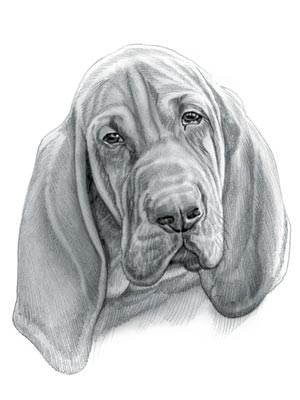
Bloodhound Characteristics: The self-reliant and unruffled Bloodhound is a breed of large dog classified as a member of the Hound Dog Group (AKC:1885), a Scent Hound. The Bloodhound, is characterized by its impressive appearance with a long, narrow head and solemn expression. Other characteristics include dark, medium sized oval-shaped eyes; long, low set ears that fall into folds, a long, thick tail and a free, fluid gait. The temperament of the Bloodhound can be described as Stubborn, Even Tempered, Independent. The coat type of the Bloodhound is described as short, smooth coat in assorted colors. The Bloodhound has a lot of extra, wrinkled skin around the head that hangs loosely in deep folds. Due to its characteristics and qualities, the Bloodhound demonstrated the desired traits of a Hunting Dog and is known by its nick name the "Sleuthhound". The origin of the Bloodhound dog breed was in Belgium where it was developed in the Roman times. Fast Facts about the Bloodhound: The following facts provide fast information about the Bloodhound breed. Size: Large *** Breed Group: Hound Dog Group (AKC:1885) - Scent Hound *** Nick name: "Sleuthhound" *** Origin: Belgium *** Male Height: 25-27 inches (63-69 cm) *** Female Height: 23-25 inches (58-63 cm) *** Male Weight: 90-110 pounds (41-50 kg) *** Female Weight: 80-100 pounds (36-45 kg) *** Coat Type: short, smooth coat *** Coat Colors: assorted colors *** Litter Size: 8-10 puppies *** Health Problems: Ectropian, Gastric Torsion, Hip and Elbow Dysplasia *** Lifespan: 8-10 years *** Hypoallergenic: No Bloodhound Breed Group and Dog Type - Hound Dog Group (AKC:1885) - Scent Hound: The Bloodhound is one of the many breeds of dogs that belong to the Hound Dog Group (AKC:1885), a Scent Hound. Other names for the Bloodhound: The Bloodhound is known by the nickname of the "Sleuthhound". Other names for this breed of dog include the St. Hubert Hound, Chien de Saint-hubert, Flemish Hound, Saint Hubert Hound and Sleuth Hound. Origin of the name: The origin of the name "Bloodhound" derives from the 1300's when 'blood' and 'hound' were combined to describe this large hunting dog. Its nickname "Sleuth Hound" derives from an old word meaning to track or trail a person. Bloodhound - Scent hound: The Bloodhound is a Scent hound, one of the hunting dog breeds, built for endurance, with deep, open nostrils that enable the canine to pick up scent particles and track game, especially stag, deer and the wild boar. Bloodhound History and Origin: The country of origin of the Bloodhound breed was in Belgium during the Roman times. Not only was this dog bred to hunt small game but they were also used to track poachers and fugitives. Its nickname of the "St Hubert Hound" relates to the belief that the Bloodhound was descended from the hounds once kept by Flemish monks at the Abbey of Saint-Hubert that was located in the midst of the Ardennes forest in Belgium. Saint Hubert is famous for his hunting escapades and is known as the patron saint of hunters and woodsmen. The Bloodhound was originally used for hunting stags and deer but as hunting these animals went into decline the scenting abilities of the Bloodhound to track down poachers. One of the earliest descriptions of the Bloodhound was in the book "House Dogs and Sporting Dogs", published in 1861 by John Meyrick, who stated that "The bloodhound does not worry, or even touch the person whose track he is placed, unless he himself is attacked". The Bloodhound breed was exported to the United States during the 1700's where it was used in the southern Plantations for hunting and to track fugitive slaves. Americans have continued to use the tracking instinct of the Bloodhound for tracking criminals and missing people. The Bloodhound was officially recognized by the American Kennel Club (AKC) in 1885. Bloodhound History - The Sherlock Holmes Dog: The 'Sleuth Hound', another nickname for the Bloodhound, derives from the dog owned by the greatest fictional sleuth of all - Sherlock Holmes. A bloodhound is mentioned in the second Sherlock Holmes novel (The Sign of Four) written by Sir Arthur Conan Doyle (1859 - 1930), in which Sherlock Holmes borrows a bloodhound to track down two villains attempting to steal Indian treasure from Mary, the future wife of Dr. Watson. In the popular TV series 'Sherlock' British actor Benedict Cumberbatch, who plays Sherlock Holmes, appears with a blood hound in series 4. Bloodhound History - Goofy the Disney Bloodhound: The most famous Bloodhound in the world is undoubtedly the Walt Disney cartoon character "Goofy". The lovable cartoon character "Goofy" first appeared in 1932 and this famous Bloodhound has remained a firm favorite with kids ever since. Goofy is a good natured, gangly, clumsy bloodhound who is always willing to try his best. Bloodhound Modern History: The modern history of the Bloodhound moved on and the good-natured Bloodhound breed is now used as a family pet in rural areas. Bloodhound Height: The Bloodhound breed is classified as a large sized dog. The height to the shoulder of a male dog is 25-27 inches (63-69 cm). The height to the shoulder of a female dog is 23-25 inches (58-63 cm). Bloodhound Weight: Not surprisingly for a large sized dog, the weight of a male dog is 90-110 pounds (41-50 kg). The weight of the smaller female dog is 80-100 pounds (36-45 kg). Bloodhound Coat Type: The coat type is described as a short, smooth coat. Bloodhound Coat Colors: The colors of this dog breed consist of assorted colors consisting of Red, Black, Tan and Liver & Tan. N.B. The term "Red" refers to reddish shades of orange, brown, and tan colors. The word "liver" signifies any shade from yellow to brown. Bloodhound Grooming - LOW Grooming Needs: The dog grooming needs of the Bloodhound are categorized as Low in order to maintain a healthy coat and reduce the risk of skin infections. The limited dog grooming needs of the Bloodhound are therefore considered to be low maintenance, requiring limited attention to grooming with casual brushing and combing. Dog Grooming needs should also include bathing the dog on a monthly basis and making regular inspections of the eyes, ears, nails and teeth. Bloodhound Litter Size: The litter size of this dog breed ranges from 8-10 puppies. Bloodhound puppies for sale can be obtained reputable breeders and from rescue centers. The cost of Bloodhound puppies varies depending on location, pedigree history and the dog breeder. Bloodhound Temperament and personality: The temperament and personality of this popular dog breed is described as Self-reliant, Stubborn, Even Tempered, Independent and Unruffled. Bloodhound Exercise Requirements - HIGH Exercise Requirements: The exercise requirements of this breed of dog is high. The Bloodhound requires regular daily exercise consisting of approximately one to two hours each day. This large, powerful dog has a free, fluid, supple, purposeful gait with strides of a moderate length and requires a brisk walking speed or jogging by the owner to meet the dogs exercise requirements. Bloodhound Diet: A fully grown Bloodhound should be fed twice a day. A diet consisting of a premium dog food can be balanced with fresh food eaten by the family. The question is What Can Dogs Eat?. Check out our comprehensive list of what dogs can and what dogs cannot eat. Bloodhound Health Problems: Potential health problems of the Bloodhound breed include Ectropian, Gastric Torsion, Hip and Elbow Dysplasia. Resolving health problems can prove to be expensive and it is always wise to obtain pet insurance or dog health insurance when buying a dog. Is the Bloodhound dog breed said to be Hypoallergenic? Answer: No. Bloodhound Lifespan: The life expectancy of dogs vary according to the size, breed of dog and any serious health problems. The typical lifespan of the Bloodhound breed is 8-10 years. Bloodhound Male Dog Names: Male Dog names are most often chosen to reflect favorite names of the owner or the strength, size, coloring and country of origin of the Bloodhound breed. To give you some inspiration regarding good male Bloodhound names our small selection might be of help with naming boy dogs. Our top male dog names are: Jupiter *** Sasquatch *** Mac *** Brutus *** Buffalo *** Magnum *** Tank *** Burly *** Dragon *** Muscles *** Trapper. Bloodhound Female Dog Names: Female Dog names tend to be softer, prettier and reflect the temperament of the girl dog. Our top choice of good female Bloodhound names are Olympas *** Persis *** Lola *** Pepper *** Nikki *** Belle *** Rosie *** Misty *** Tasha *** Hannah *** Precious. Fast Facts about the Bloodhound: The following facts provide fast information about the Bloodhound breed. Scientific name: Canis lupus familiaris *** Dog Breed Group: Hound Dog Group (AKC:1885) - Scent Hound *** Size: Large *** Country of Origin: Belgium *** History / Date: Roman times *** Male Bloodhound Height: 25-27 inches (63-69 cm) *** Male Bloodhound Weight: 90-110 pounds (41-50 kg) *** Coat Type: short, smooth coat *** Litter Size: 8-10 puppies *** Bloodhound Health Problems: Hip dysplasia, thyroid, and joint problems *** Bloodhound Lifespan: 8-10 years *** |