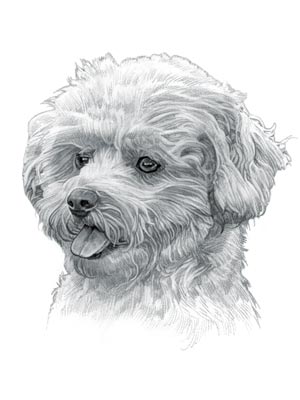
Bichon Frise Characteristics: The Fun-loving and Sweet-tempered Bichon Frise is a breed of small dog classified as a member of the Non Sporting Dog Group (AKC:1972). The Bichon Frise, is characterized by its cute, smart appearance with a well proportioned head and proud expression. Other characteristics include a distinct plumed tail, large, dark, round eyes; close set, pendulous ears; a long, arched neck and a balanced, steady gait. The temperament of the Bichon Frise can be described as Playful, Gentle, Cheerful. The coat type of the Bichon Frise is described as double, curly coat in assorted colors. Due to its characteristics and qualities, the Bichon Frise demonstrated the desired traits of a Performer and Companion dog and is known by its nick name the "Curly Lap Dog". The origin of the Bichon Frise dog breed was in France where it was developed in the 1300's. Fast Facts about the Bichon Frise: The following facts provide fast information about the Bichon Frise breed. Size: Small *** Breed Group: Non Sporting Dog Group (AKC:1972) *** Nick name: "Curly Lap Dog" *** Origin: France *** Male Height: 9-12 inches (23-30 cm) *** Female Height: 9-11 inches (23-28 cm) *** Male Weight: 7-12 pounds (3-5 kg) *** Female Weight: 7-12 pounds (3-5 kg) *** Coat Type: double, curly coat *** Coat Colors: assorted colors *** Litter Size: 2-5 puppies *** Health Problems: Skin ailments, Epilepsy, Cataracts *** Lifespan: 12-15 years *** Hypoallergenic: Yes Bichon Frise Breed Group and Dog Type - Non Sporting Dog Group (AKC:1972): The Bichon Frise is one of the many breeds of dogs that belong to the Non Sporting Dog Group (AKC:1972). Other names for the Bichon Frise: The Bichon Frise is known by the nickname of the "Curly Lap Dog". Other names for this breed of dog include the Tenerife, Bichon A Poil Frise and Bichon Tenerife. Origin of the name Bichon Frise: The origin of the name "Bichon Frise" derives from the Middle French word 'bichon' meaning "small long-haired dog". The 'Barbichon' dog breeds, later shortened to 'Bichon', included the Maltese, the Lowchen, the Coton de Tulear and the Bichon Tenerife, the Bichon Bolognese and the Bichon Havanese. The word 'Frise' refers to a tight curly, 'frizzy' coat. Bichon Frise History and Origin: The country of origin of the Bichon Frise breed was in France during the 1300's. The ancestor of the Bichon Frise is the Barbet, an ancient French Water Dog, a working dog with a long woolly coat and the forbear of many other breeds including the Poodle. The Barbet was commonly used by sailors and explorers in their journeys across the Mediterranean. The French explorer Jean de Bethencourt (1362–1425) was given the title of the King of the Canaries by the Spanish King, Henry III of Castile (1379 – 1406) and it was around this time that the 'Bichon Tenerife' was introduced to France. During the 1500's the Bichon Frise became popular as a lapdog in the royal courts of Europe and a great favorite with during the reign of King Francis I of France (1494–1547). In 1534 Lady Lisle, wife of the Lord Deputy of Calais sent a Bichon Frise called "Purkoy" as a gift for Queen Anne Boleyn, the second wife of King Henry VIII (1491 – 1547). In 1526 King Henry VIII had issued a decree in the Eltham Ordinances stating that no dogs were allowed at Court except for "some small spanyells for the ladies" which gave rise to the popularity of lapdogs at the Tudor, Elizabethan and Stuart courts. (Bichon type dogs were referred to as Spaniels in England). The popularity of the Bichon Frise grew immense in France during the reign of King Henry III (1551 – 1589) of the House of Valois who kept his Bichon Frise in a basket he wore around his neck. This practice became the fashion and was adopted by most of the French courtiers. The passion for the lapdog declined and the Bichon Frise was found performing tricks in circuses or accompanying organ grinders during the late 18th and early 19th century. The working life of the Bichon Frise declined and it was once again enjoyed as a pampered pet. In 1933 the official standard was written and the name 'Bichon Tenerife' was changed to the Bichon Frise. Bichon Frise Modern History: The modern history of the Bichon Frise moved on and the breed was introduced to the United States in 1956 by Francois and Helene Picault who had moved from France to Wisconsin. In 1964 the Bichon Frise Club of America was established. The Bichon Frise was officially recognized by the American Kennel Club (AKC) in 1972. Bichon Frise Height: The Bichon Frise breed is classified as a small sized dog. The height to the shoulder of a male dog is 9-12 inches (23-30 cm). The height to the shoulder of a female dog is 9-11 inches (23-28 cm). Bichon Frise Weight: The weight of this small sized dog, in a male dog is 7-12 pounds (3-5 kg). The weight of the smaller female dog is 7-12 pounds (3-5 kg). Bichon Frise Coat Type - LOW shedding coat: The coat type is described as double, curly coat. The coat of this dog grows continuously, like human hair growth. Bichon Frise Coat Colors: The colors of this dog breed consist of assorted colors consisting of White, White & Cream, White & Apricot and White & Buff. Bichon Frise Grooming - HIGH Grooming Needs: The grooming needs of the Bichon Frise are categorized as high in order to maintain a healthy coat and reduce the risk of skin infections. The high grooming needs of the Bichon Frise is considered to be high-maintenance and requires almost daily brushing and combing. Grooming Requirements should include bathing the dog on a monthly basis and making regular inspections of the nails, teeth, eyes and ears. Bichon Frise Litter Size: The litter size of this dog breed ranges from 2-5 puppies. Bichon Frise puppies for sale can be obtained reputable breeders and from rescue centers. The cost of Bichon Frise puppies varies depending on location, pedigree history and the dog breeder. Bichon Frise Temperament and personality: The temperament and personality of this popular dog breed is described as Fun-loving, Playful, Gentle, Cheerful and Sweet-tempered. Bichon Frise Exercise Requirements - MINIMAL Exercise Requirements: The exercise requirements of this breed of dog is MINIMAL. The Bichon Frise requires regular daily exercise consisting of approximately 30 minutes every day. This small dog has a balanced, steady gait with small strides and only requires a fairly slow speed by the owner to meet the dogs exercise requirements. Remember that it would take a lot of extra steps by your dog to keep up with your normal walking pace. Bichon Frise Diet: A fully grown Bichon Frise should be fed twice a day. A diet consisting of a premium dog food can be balanced with fresh food eaten by the family. The question is What Can Dogs Eat?. Check out our comprehensive list of what dogs can and what dogs cannot eat. Bichon Frise Health Problems: Potential health problems of the Bichon Frise breed include Skin ailments, Epilepsy, Cataracts. Resolving health problems can prove to be expensive and it is always wise to obtain pet insurance or dog health insurance when buying a dog. Is the Bichon Frise dog breed said to be Hypoallergenic? Answer: Yes (Refer to Hypoallergenic Dogs). Bichon Frise Lifespan: The life expectancy of dogs vary according to the size, breed of dog and any serious health problems. The typical lifespan of the Bichon Frise breed is 12-15 years. Bichon Frise Male Dog Names: Male Dog names are most often chosen to reflect favorite names of the owner or the strength, size, coloring and country of origin of the Bichon Frise breed. To give you some inspiration regarding good male Bichon Frise names our small selection might be of help with naming boy dogs. Our top male dog names are: Little Boy *** Puddles *** Bonbon *** Pumpkin *** Nipper *** Peanut *** Midge *** Squirt *** Pip *** Itsy. Bichon Frise Female Dog Names: Female Dog names tend to be softer, prettier and reflect the temperament of the girl dog. Our top choice of good female Bichon Frise names are Jada *** Kishi *** Lael *** Daisy *** Lucy *** Sadie *** Francine *** Gabrielle *** Giselle *** Sadie. Fast Facts about the Bichon Frise: The following facts provide fast information about the Bichon Frise breed. Scientific name: Canis lupus familiaris *** Dog Breed Group: Non Sporting Dog Group (AKC:1972) *** Size: Small *** Country of Origin: France *** History / Date: 1300's *** Male Bichon Frise Height: 9-12 inches (23-30 cm) *** Male Bichon Frise Weight: 7-12 pounds (3-5 kg) *** Coat Type: double, curly coat *** Litter Size: 2-5 puppies *** Bichon Frise Health Problems: Hip dysplasia, thyroid, and joint problems *** Bichon Frise Lifespan: 12-15 years *** |