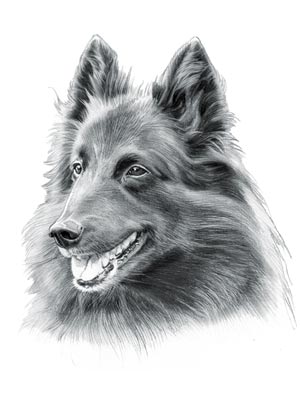
| Belgian Shepherd (Groenendael) |
Belgian Shepherd Characteristics: The diligent and amiable Belgian Shepherd, aka the Groenendael, is a breed of large sheepdog classified as a member of the Herding Dog Group (AKC:1912). The Belgian Shepherd, is characterized by its sturdy appearance with a long, clearly defined head and proud expression. Other characteristics include medium sized, black coat, almond-shaped dark, black rimmed eyes; erect, triangular shaped ears; a powerful, supple back and a brisk gait. The temperament of the Belgian Shepherd can be described as Hard-working, Friendly, Protective. The coat type of the Belgian Shepherd is described as long, straight coat in black. Due to its characteristics and qualities, the Belgian Shepherd demonstrated the desired traits of a Watch dog and Farm Dog and is known by its nick name the "Groenendael". The origin of the Belgian Shepherd (Groenendael) breed was in Belgium where it was developed in the 1800's. Fast Facts about the Belgian Shepherd : The following facts provide fast information about the Belgian Shepherd breed. Size: Large *** Breed Group: Herding Dog Group (AKC:1912) *** Alternative name: "Groenendael" *** Origin: Belgium *** Male Height: 24 - 26 inches (61 - 66 cm) *** Female Height: 22 - 24 inches (56 - 61 cm) *** Male Weight: 65 - 75 pounds (29 - 34 kg) *** Female Weight: 60 - 70 pounds (27 - 32 kg) *** Coat Type: long, straight coat *** Coat Colors: Black *** Litter Size: 6-10 puppies *** Health Problems: Eye problems, Epilepsy, Hip Dysplasia *** Lifespan: 12-14 years *** Hypoallergenic: No Belgian Shepherd Breed Group and Dog Type - Herding Dog Group (AKC:1912): The Belgian Shepherd (Groenendael), is one of the many breeds of dogs that belong to the Herding Dog Group (AKC:1912). Other names for the Belgian Shepherd: The Belgian Shepherd is known by the alternative name of the "Groenendael". Other names for this breed of dog include the Belgian Sheepdog and Chien de Berger Belge. N.B. The word 'Berger' is an occupational name for a shepherd. Names of the Belgium Sheepdogs: The names of different types of Belgian Shepherd dogs are the Laekenois, the Malinois and the Tervueren and of the Groenendael. The different types of the Belgian sheepdogs were named, more or less, for the towns in Belgium where they originated. Origin of the name: The origin of the name "Belgian Shepherd" derives from the role of the dog, herding and guarding flocks of sheep. Its alternative name of "Groenendael" derives from the village of Groenendael located in the Flemish Brabant (a region of Belgium) about 10 kilometres (6.2 mi) southeast of Brussels. Belgian Shepherd History and Origin: The country of origin of the Belgian Shepherd breed was in Belgium during the 1800's. From time immemorial sheepdogs, descending from the Gray wolf and the Peat Dog, have presided over flocks of sheep in nearly every land and became widespread in Continental Europe. One of the descendents of these ancient dogs was the Belgian Shepherd dog. The first breeder of the black, long haired Belgian Shepherd was Nicholas Rose who lived in the village of Groenendael. European Sheepdogs: The European sheepdogs varied in size, depending on the predators in their regions - the sheepdogs that guarded against bears were the biggest dogs. Towards the end of the 19th century the sheepdogs were given specific names such as the German Shepherd Dog, the Briard, Great Pyrenees, Picard, Beauceron of France, the the Maremma sheepdog of Italy and the Kuvasz and the Puli from Hungary. Belgian Shepherd History: The different varieties sheepdogs in Belgium were not distinguished until 1891 when a Professor Adolphe Reul of the Veterinary Institute in Cureghem, just outside Brussels, took an interest in the sheepdogs of Belgium. Professor Reul arranged for a conference of dog owners, shepherds and herdsman at Cureghem. The attendees were invited to describe and discuss their various dogs, which accompanied them. Professor Reul was able to look at nearly 100 dogs that were brought before him. He advised the dog owners to establish selective breeding programs for dogs of the same coat type, regardless of their hair colors. One of the dog breeders, Nicholas Rose, mated a black long-haired sheepdog called "Petite" with his own dog "Piccard" and these dogs became the forebears of the black Belgian Shepherd dog, the Groenendael. On September 29, 1891, the Club du Chien de Berger Beige (Belgian Shepherd Dog Club) was founded and on May 8, 1892 the first Belgian specialty dog show was held in Cureghem, Belgium. The standard for the breeds were re-written on several occasions and the black, long-haired Belgian Shepherd was given the name Groenendael. The Belgian Shepherd was exported to other countries in Europe and to the United States. The Belgian Sheepdog was officially recognized by the American Kennel Club (AKC) in 1912. Differences between the Belgian Sheepdog Breeds: The four main sheepdogs in Belgium were the Groenendael (Belgian Shepherd), the Laekenois, the Malinois and the Tervueren. What's the difference between the four breeds of Belgian sheepdogs? The sheepdogs have different types of coat texture, coat colour and length of coat. The Belgian Shepherd (Groenendael) is long coated and has a black coat, the Belgian Tervueren has a long, double coat of fawn or red-brown color, the Belgian Malinois has a shorter coat of fawn or red-brown with a black mask and black ears, and the Belgian Laekenois has a wire or rough coat in fawn, gray or red-brown colors. Belgian Shepherd Height: The Belgian Shepherd breed is classified as a large sized dog. The height to the shoulder of a male dog is 24 - 26 inches (61 - 66 cm). The height to the shoulder of a female dog is 22 - 24 inches (56 - 61 cm). Belgian Shepherd Weight: Not surprisingly for a large sized dog, the weight of a Belgian Shepherd male dog is 65 - 75 pounds (29 - 34 kg). The weight of the smaller female dog is 60 - 70 pounds (27 - 32 kg). Belgian Shepherd Coat Type: The coat type is described as a long, straight coat. Belgian Shepherd Coat Colors: The colors of the Belgian Shepherd dog breed are mainly black. Belgian Shepherd Dog Grooming - LOW Grooming Needs: The dog grooming needs of the Belgian Shepherd are categorized as Low in order to maintain a healthy coat and reduce the risk of skin infections. The limited dog grooming needs of the Belgian Shepherd are therefore considered to be low maintenance, requiring limited attention to grooming with casual brushing and combing. Dog Grooming needs should also include bathing the Belgian Shepherd on a monthly basis and making regular inspections of the eyes, ears, nails and teeth. Belgian Shepherd Litter Size: The litter size of this dog breed ranges from 6-10 puppies. Belgian Shepherd puppies for sale can be obtained reputable breeders and from rescue centers. The cost of Belgian Shepherd puppies varies depending on location, pedigree history and the dog breeder. Belgian Shepherd Temperament and personality: The temperament and personality of the popular Belgian Shepherd dog breed is described as Diligent, Hard-working, Friendly, Protective and Amiable. Belgian Shepherd Exercise Requirements - HIGH Exercise Requirements: The exercise requirements of this breed of dog is high. The Belgian Shepherd requires regular daily exercise consisting of approximately one to two hours each day. This large, powerful dog has a supple, brisk, fluid gait with strides of a moderate length and requires a brisk walking speed or jogging by the owner to meet the dogs exercise requirements. Belgian Shepherd Diet: A fully grown Belgian Shepherd should be fed twice a day. A diet consisting of a premium dog food can be balanced with fresh food eaten by the family. The question is What Can Dogs Eat?. Check out our comprehensive list of what dogs can and what dogs cannot eat. Belgian Shepherd Health Problems: Potential health problems of the Belgian Shepherd breed include Eye problems, Epilepsy, Hip Dysplasia . Resolving health problems can prove to be expensive and it is always wise to obtain pet insurance or dog health insurance when buying a dog. Is the Belgian Shepherd breed said to be Hypoallergenic? Answer: No. Belgian Shepherd Lifespan: The life expectancy of dogs vary according to the size, breed of dog and any serious health problems. The typical lifespan of the Belgian Shepherd breed is 12-14 years. Belgian Shepherd Male Dog Names: Male Dog names are most often chosen to reflect favorite names of the owner or the strength, size, coloring and country of origin of the Belgian Shepherd breed. To give you some inspiration regarding good male Belgian Shepherd names our small selection might be of help with naming boy dogs. Our top male dog names are: Devereau *** Lucien *** Marceau *** Eduard *** Marcel *** Napoleon *** Etienne *** Fabien *** Stryker *** Talon. Belgian Shepherd Female Dog Names: Female Dog names tend to be softer, prettier and reflect the temperament of the Belgian Shepherd girl dog. Our top choice of good female Belgian Shepherd names are Therese *** Veronique *** Arleta *** Vesta *** Cupid *** Ceres *** Francine *** Gabrielle *** Echo *** Garnet *** Jezebel. Fast Facts about the Belgian Shepherd : The following facts provide fast information about the Belgian Shepherd breed. Scientific name: Canis lupus familiaris *** Dog Breed Group: Herding Dog Group (AKC:1912) *** Size: Large *** Country of Origin: Belgium *** History / Date: 1800's *** Male Belgian Shepherd Height: 24 - 26 inches (61 - 66 cm) *** Male Belgian Shepherd Dog Weight: 65 - 75 pounds (29 - 34 kg) *** Coat Type: long, straight coat *** Litter Size: 6-10 puppies *** Belgian Shepherd Health Problems: Hip dysplasia, thyroid, and joint problems *** Belgian Shepherd Lifespan: 12-14 years *** |